Andrew Chen and Johan Lam met at a wedding, where they were both groomsmen and both turned out to be wearing the kind of rare graphic T-shirt that, in the early two thousands, told one quiet kid he had found another. They started a clothing brand the way a lot of people did in that era, by getting some tees printed and hoping a shop would carry them. What separates 3sixteen from the thousands of streetwear labels that came and went is what happened next: the two of them grew up, narrowed their focus to one thing they could make better than almost anyone, and built it into one of the defining American denim brands of the century. The name they chose at the very start, from a verse most people can recite, has stayed on the label the whole way.
A Verse and a Stack of T-Shirts
3sixteen takes its name from John three sixteen, the best known verse in the Christian Bible, and the founders have never been coy about why. Chen and Lam are men of faith, and they wanted a name that would sit on every hangtag as a daily reminder to do business with integrity, to treat people well, and to make things worth keeping. The brand’s own about page still puts it plainly, that its foundation rests on faith, with humility and integrity held level with quality and design, and signs off with an inversion of another verse: the last shall be first.
The company began in New York City in two thousand three, and for the first few years it was a side project. Chen kept a full-time job and ran 3sixteen at night, pressing shirts and carrying mock-ups around to the streetwear shops that might give an unknown label a chance. “Anybody can get a T-shirt printed, and we had no idea what we were doing,” Lam has said of those early days. It was the loud, colorful streetwear era, and 3sixteen made loud, colorful graphics to match. Then, around two thousand seven, Lam’s own taste began to drift toward something quieter, darker, and more restrained, and the brand drifted with him. That small change in a founder’s eye turned out to be the hinge the whole company would swing on.
They were two graphic-tee guys with a Bible verse for a name. Then they decided to make a jean.
The SL-100x
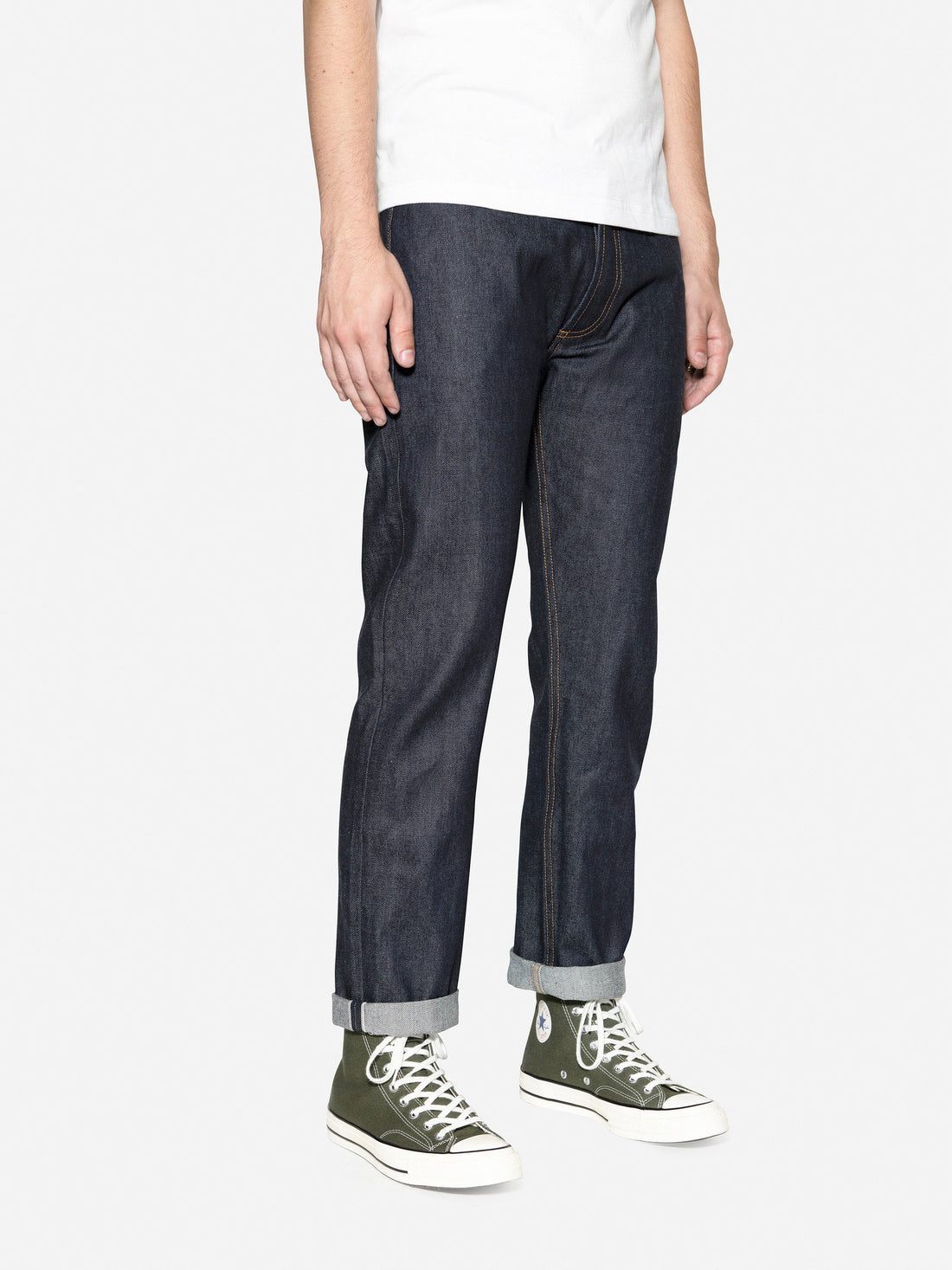
In two thousand eight, five years into a life as a T-shirt brand, 3sixteen released its first pair of jeans, the SL-100x. The move could have been a vanity project, the sort of one-off raw denim drop a streetwear label does to look serious. Instead it became the foundation of everything. Rather than buy a stock fabric off a mill’s shelf the way most young brands did, Chen and Lam went to Okayama, in the heart of Japan’s denim country, and worked directly with Kuroki Mills to develop their own cloth: a fourteen-and-a-half-ounce raw indigo selvedge, rope dyed and woven on vintage shuttle looms, with a soft hand on the inside that is unusual for raw denim and makes it forgiving to break in.
Designing a proprietary denim instead of ordering a catalog one was the decision that set 3sixteen apart. It meant the founders controlled the cloth from the fiber up, and it meant the jean could not be copied by simply buying the same bolt. That first custom weave, the 100x, is still the heart of the line today, woven by the same mill more than fifteen years on. The denim world noticed, and a T-shirt brand quietly became a denim brand.
Cheated, Burned, and Still Standing
The climb was not smooth, whatever the polished product photos suggest now. In their early years the founders ran straight into the hazards that wait for any small label dealing with factories and retailers it cannot yet afford to walk away from. They have described hitting “pretty crazy hurdles with retailers and manufacturers, everything from being cheated out of money to horrible production runs.” A brand with no cushion can be killed by a single bad batch or a single buyer who does not pay, and 3sixteen survived more than one of each.
The other near-miss was the one they chose. By around two thousand eleven the company was still designing full collections, outerwear and shirting and footwear and accessories, spreading itself thin across everything a menswear brand is supposed to sell. The founders made the hard call to stop, and to pour all of their time, effort, and money into denim alone. Lam later called it “one of the best decisions 3sixteen has ever made.” It is also the kind of decision that ends companies when it goes wrong, a deliberate narrowing in an industry that rewards more. Their stated philosophy through all of it has been patience over fireworks, “this methodical climb upwards versus a meteoric rise and the inevitable crash.”
The Last Jean Factory in San Francisco
The cloth comes from Japan, but the jeans are made in California. 3sixteen has its denim, and by now most of the rest of its line, cut and sewn at a factory called Skyblue, which occupies a three-story building in downtown San Francisco and which the brand describes, without much exaggeration, as the last jean manufacturer left in the city. The relationship started small, with Skyblue reassembling jeans, and grew over the better part of a decade until the factory was making the tees, the jeans, the bottoms, the shirts, and the jackets. Many of the people on its floor are first- or second-generation immigrants, the kind of skilled garment workers a city loses for good once the work leaves. Keeping a jean program alive there is its own small argument about what reindustrialization actually looks like, one room and one crew at a time.
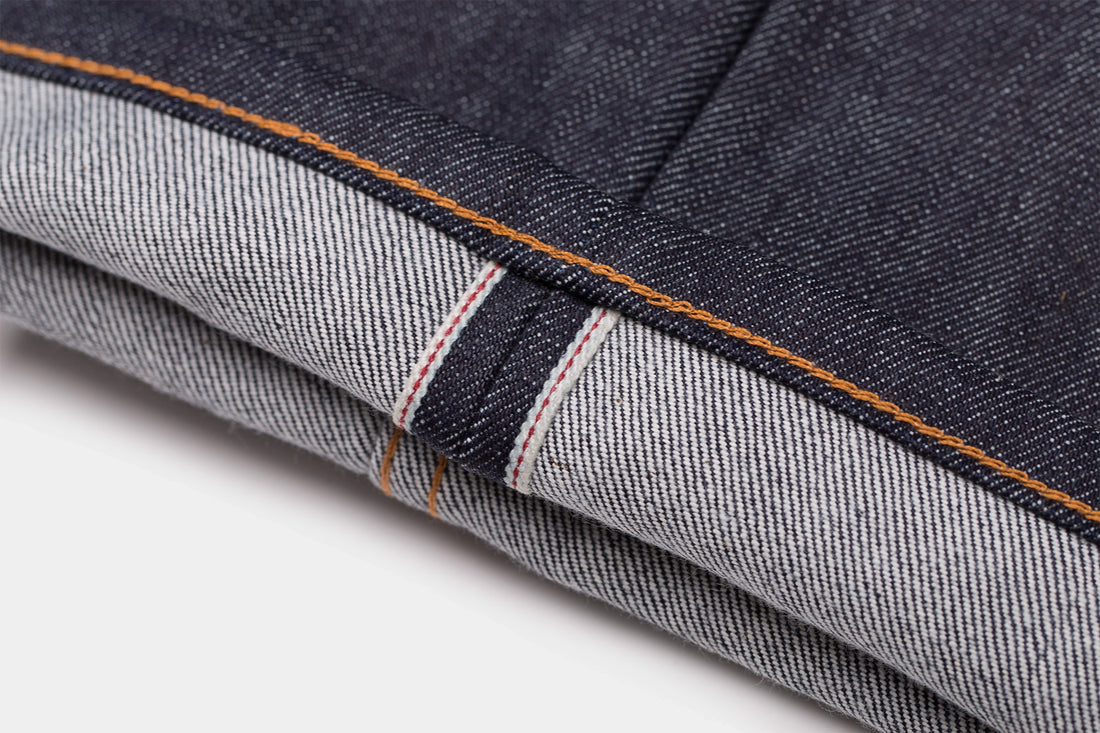
The thread that runs from the graphic tees to the flagship jean is a belief in things that improve with age. 3sixteen builds for patina, choosing fabrics and trims for how they will look years from now rather than how they photograph on the day they ship. The aim, in the brand’s own words, is a garment that is “well aged, never ‘old.’” That same instinct turns up in the partnerships the company keeps, where it pairs with houses that own a craft it does not: Schott for leather, Crescent Down Works for down, the New York retailer Self Edge for an early Japan-made line that helped make its name. The heavyweight T-shirt that the brand still sells is a straight line back to where it started, now a nine-ounce, made-in-USA staple instead of a printed novelty.
Heavyweight T-Shirt
The piece the whole company grew out of, now a nine-ounce, made-in-USA tee that wears in like the denim. The easiest, cheapest way to own something 3sixteen actually makes.
CT-100x Classic Tapered
The flagship: a high-rise, tapered cut on the custom fourteen-and-a-half-ounce 100x selvedge, cut and sewn in San Francisco. The whole story in one pair.
CT-101x Lightweight
The same tapered cut on a lighter twelve-ounce version of the house denim, for warmer weather or a first raw jean that breaks in faster.
Go Further
The Bottom Line
3sixteen is the case for the slow, narrow build. Two friends who started with a printed T-shirt and a Bible verse made one custom denim, refused to rush, and turned it into a brand that has outlasted nearly all of its peers. The cloth is woven in Japan, on looms that do it better than anyone, and the jeans are sewn in the last factory of their kind in San Francisco. It is a reminder that keeping the making at home does not always mean owning every step, only refusing to give up the ones that matter.