
This is a story about an Englishman, so it is the one profile in this series that does not end in America. We tell it anyway, because the question Blackhorse Lane Ateliers is trying to answer is exactly the one the American makers are: can a country that sent its garment work overseas build it back at home, pay the people who do it properly, and make something good enough that customers come anyway. London lost its denim manufacturing more than fifty years ago. Han Ates is the man who brought it back, and he did it after spending the first half of his career proving to himself how the cheap way works, and deciding he wanted no more of it.
The Tailor Who Chased the Bottom
Ates is a second-generation Londoner of Turkish Kurdish descent, from a family with deep roots in East London’s textile trade. He trained as a tailor, and in the nineteen nineties he built a factory of his own on Blackhorse Lane in Walthamstow, making tailored garments. It grew into a real business, more than a hundred people at its height, supplying jackets to established names. It was, by the measure the industry uses, a success.
It was also a trap. To keep the prices competitive he did what everyone did, and moved the work to where the labor was cheapest, first to Eastern Europe and then to China. By the middle of the two thousands he was spending his time trading in factories on the other side of the world, watching the making drift further and further from the man whose name was on it. He had a thriving company and no part of it he could touch. He has been blunt, since, about what he learned: that cheap clothing is not an accident of efficiency but a thing built on the backs of people paid too little, and that the only way out is to stop chasing the bottom and keep the skill at home.
He had a thriving company and no part of it he could touch.
A Volvo, a Restaurant, and the Long Way Home
So he sold it. He sold his share of the business, packed his family into an old Volvo, and drove around Europe with no plan beyond getting some distance from the thing he had built. When he came home he opened a restaurant, Homa, in Stoke Newington, near where he lived. It was a deliberate change of direction, and it did something he had not expected: it rooted him back in a neighborhood, in good ingredients honestly sourced, in the daily work of a small business that served the people around it. The restaurant taught him what he actually wanted, which turned out not to be food.
What he missed was making. He had always been happiest cutting and sewing, with his hands on the cloth, and the restaurant had given him everything except that. So in two thousand sixteen he went back to the street that already had his name on it, took a repurposed nineteen twenties factory building on Blackhorse Lane, and started over, this time making the one garment he was sure the world would always want and almost no one in his city still made: a pair of jeans.
London’s Last Jeans Factory
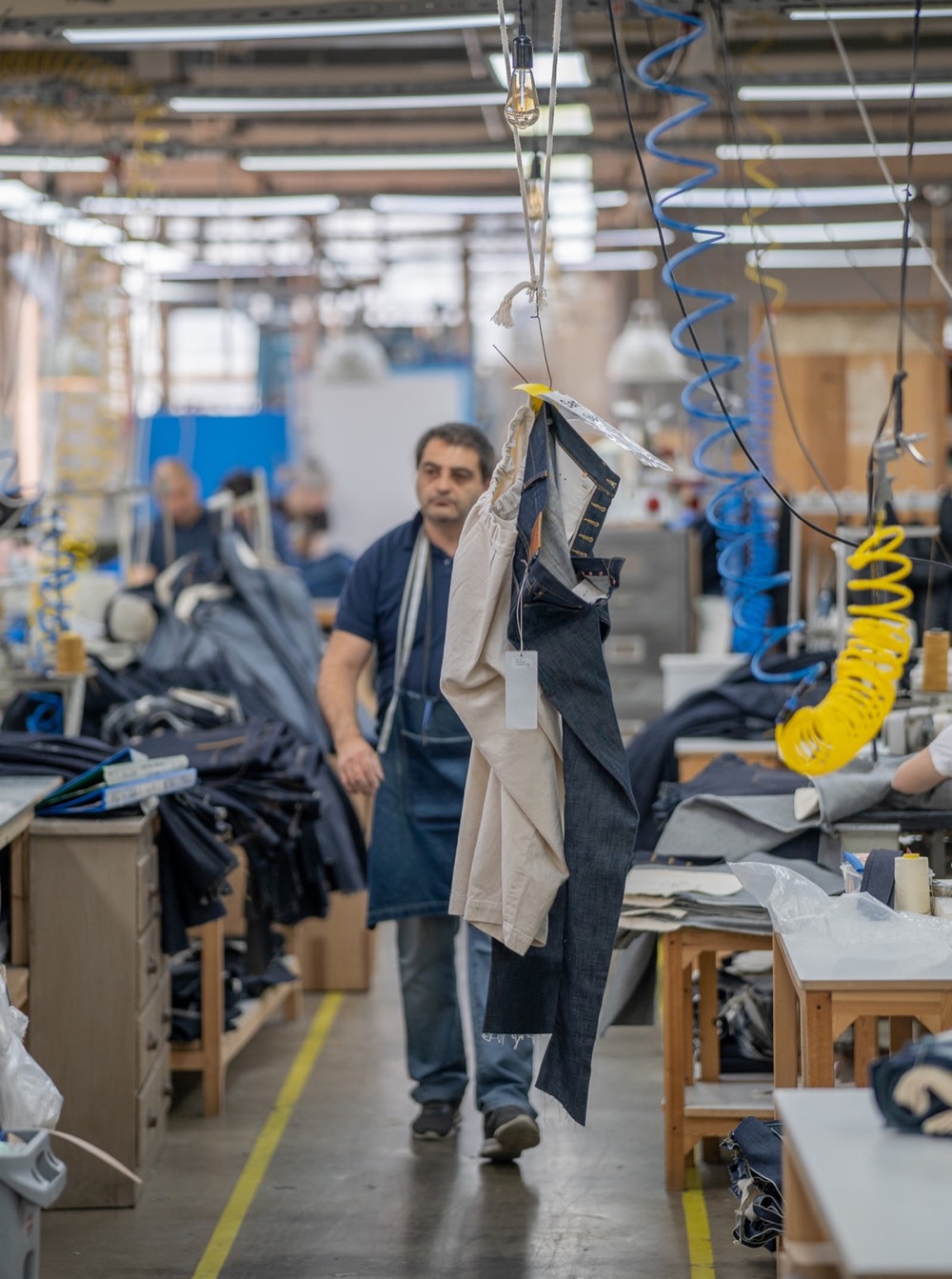
When it opened, Blackhorse Lane Ateliers was the first factory to make jeans in London in over fifty years, and it remains the only one of any size in the city. That is the spark of the whole enterprise: not a single viral product but a single audacious fact, that you could once again buy a pair of jeans cut and sewn in London by the people who designed them. Ates put it about as plainly as a mission statement can be put. He wanted, he has said, to make the best jeans in the world, and to do it properly.
Doing it properly meant a model that runs against the grain of the industry. The jeans are cut and sewn in-house, by skilled machinists hired locally. The hardest part, he found, was not selling the jeans but finding the people to make them, because two generations of offshoring had hollowed out the skill base of a city that once stitched its own clothes. So the factory started teaching: masterclasses where anyone can learn to make a pair of jeans, both to train the next machinists and to let customers see exactly what goes into the thing they are buying. The door, by design, is open.
How It Is Made
Blackhorse Lane is honest about the one thing it cannot do at home. Britain has no denim mills of any scale, so the cloth comes from the weavers Ates rates as the best in the world: indigo selvedge from the Japanese mills, organic and selvedge denim from Italy, and denim from Turkey, including organic cotton woven close to where it is grown. He leans hard on organic and biodynamic cotton, on the argument that the better fiber makes a stronger cloth that lasts longer, which is the whole point. Everything after the cloth happens in Walthamstow: the patterns, the cutting, the sewing, and the washing, the last of it now developed in an in-house Wash Lab built to cut the water and chemistry that denim finishing usually burns through.
And then the part that turns a factory into a philosophy: every garment Blackhorse Lane makes comes with free repairs for life, and the shop will mend any denim, whether they made it or not. The motto is “made by us for life.” A torn knee or a blown crotch seam is not the end of a pair of jeans, it is a Tuesday at the workshop. In an industry that profits when your clothes wear out, a maker that fixes them for free, forever, is making an argument with its hands.
The Share in the Thing
The catalog has compounded the way a maker’s should, from a few core fits into a deep range of selvedge, raw, and organic jeans for men and women, named for London postcodes and built across a spread of Japanese, Italian, and Turkish cloths. Above the ready-to-wear sits a made-to-measure service, a pair cut to your own body in the same factory. There are collaborations with the likes of Belstaff, contract work for smaller labels Ates is careful not to compete with, and a research partnership with the University of the Arts London on sustainable washing.
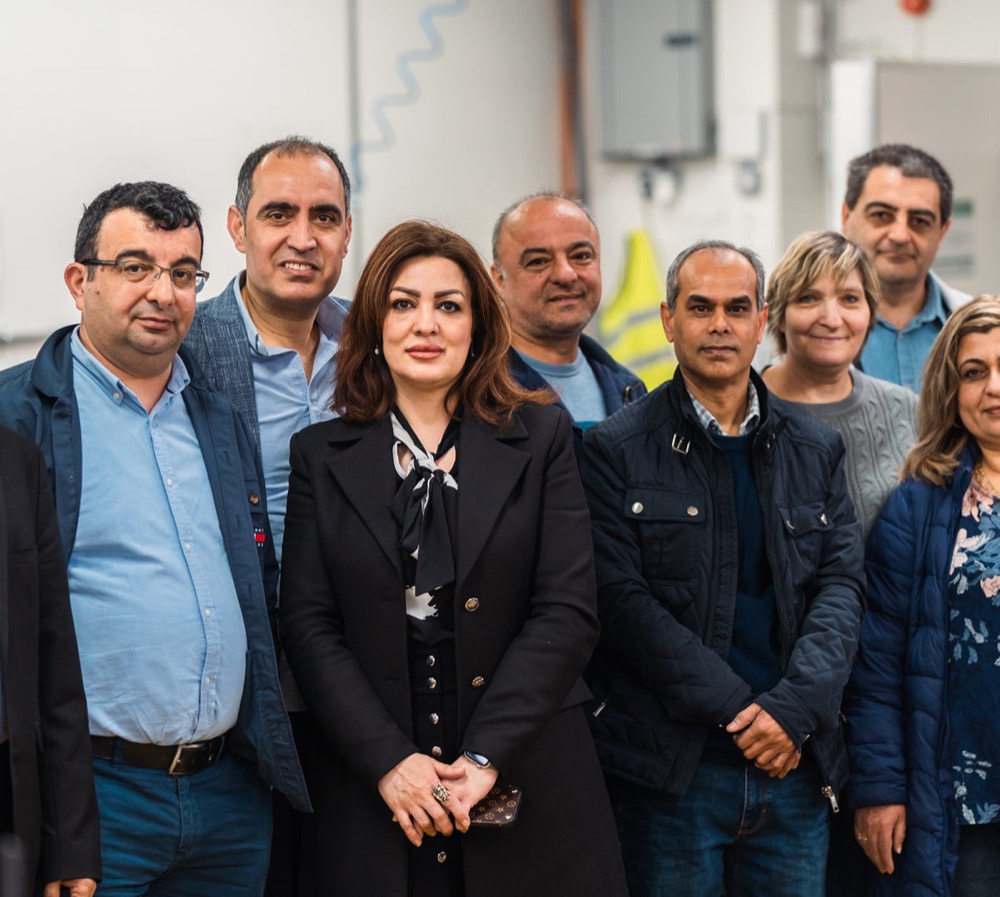
But the compounding that matters most is not in the product line. Ates set the company up so that the machinists, the people actually making the jeans, are offered a share of ownership in it, on a fair living wage, with none of the zero-hour contracts the rest of the trade runs on. He left an industry built on paying makers as little as possible and built one designed to give them a stake. That is the heart of it, and it is why the factory feels less like a brand and more like an argument that you can do this the right way and still keep the lights on.
NW1 Relaxed 14oz Japanese Selvedge
A fourteen-ounce raw Japanese selvedge jean with a heritage cut, cut and sewn in Walthamstow. The whole maker story in one ready-to-wear garment.
Made-to-Measure Jeans
A pair patterned and built to your own measurements in the London factory. The deepest way into the house, for the buyer who wants their exact fit.
Repairs for Life
They mend any denim, theirs or not, free, for as long as you wear it. The cheapest way to understand what this maker is for. Bring in the jeans you already own.
Go Further
The Bottom Line
Han Ates spent twenty years learning the cheap way, then spent the next ten building the opposite. Blackhorse Lane Ateliers is the only real jeans factory in London, and it is owned, in part, by the people who sew the jeans. The cloth crosses borders, as it does for nearly everyone. The making, the mending, and the stake in the work stay in Walthamstow.