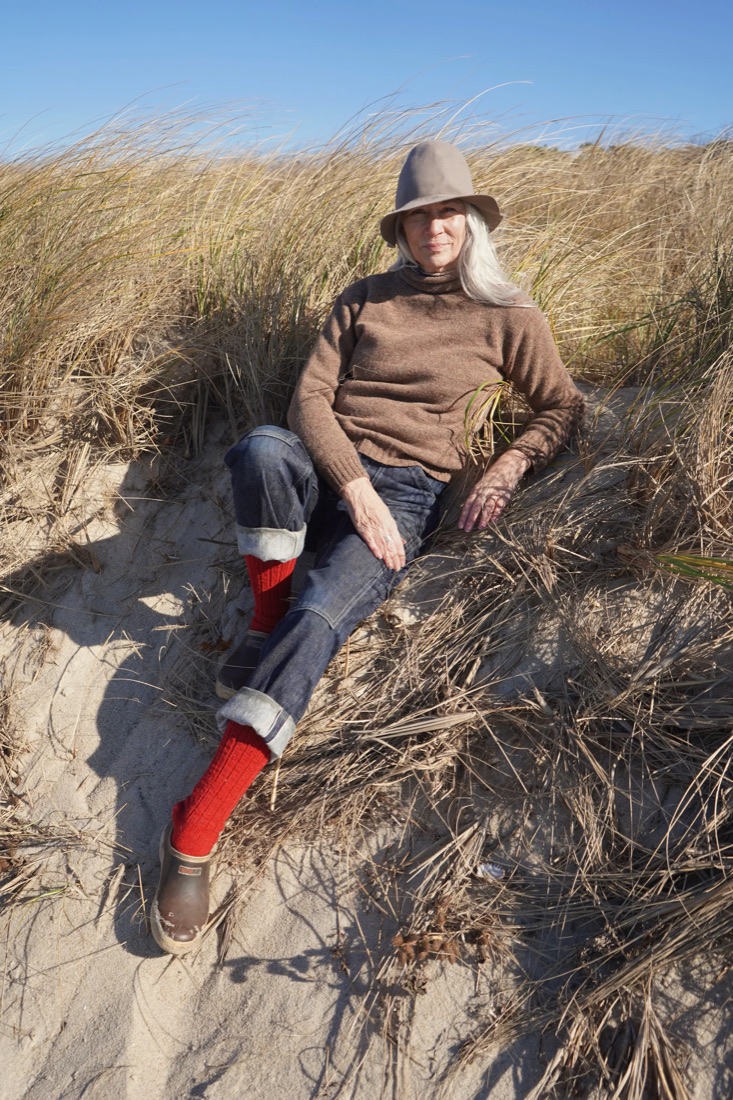
Gamine Workwear makes dungarees, bib overalls, coveralls, work shirts, smocks and sweaters for women who wear their clothes out at work: gardeners, farmers, carpenters, mechanics, set designers, sailmakers. It was founded in two thousand fourteen by Taylor Johnston, a horticulturist who could not find a pair of work pants that fit her and held up, and it now runs from a shop in the old Spite Tower in Adamsville, a village in Little Compton, Rhode Island. Its denim has come from Cone’s White Oak plant, Vidalia Mills and Japan, and its clothes are sewn in small American workrooms from Tennessee to Texas to Rhode Island.
Move the Vine, Child
Johnston spent more than a decade as a professional gardener before she made a single garment, much of it at the Isabella Stewart Gardner Museum in Boston, where she rose to manage the greenhouse and gardens. She dressed the way most women in the trades did then, out of thrift stores and the men’s rack. She tried everything from Carhartt to expensive Japanese workwear and reached a frustrating conclusion: the clothes that looked good fell apart in the field, and the clothes that lasted fit badly. Carhartt, she told The Bay in two thousand twenty-four, did not make clothing for women ten years earlier.
Then, one April, she was carrying the museum’s famous hanging nasturtium vines into the central courtyard when a voice called out for her to move the vine so he could see her face. It was Bill Cunningham, the New York Times street style photographer, shooting the gardeners at work. The picture ran in the paper, and Johnston, in ill-fitting men’s clothes and bargain sweatshirts, was mortified. She told The Cut she looked like Little Orphan Annie. Soon after, she went looking for work clothes one last time with a checklist: made transparently, of natural fibers, by people paid a living wage, built to last. Nothing on the market met all four, so she decided to make it.
“Move the vine so I can see your face, child!” Bill Cunningham, as Taylor Johnston remembers it
What she was after was simple and a little radical for its moment: clothing a woman could do hard physical work in and still be taken seriously. She told The New York Times in two thousand sixteen that the goal was something that felt like she “could be taken seriously in.” The French name means a woman with a boyish, mischievous charm. The website, from the start, carried a no-pink clause.
Two Years in the Field
Johnston had no design training, so she worked by partnership. She drafted the first dungaree with a patternmaker who had decades in the jean business, and then she did what gardeners do: she tested it. For two years she handed pairs to farmers, construction workers and gardeners, wore them through heat, humidity and New England ice, and collected notes on how the denim wore and where it failed. Friends who designed womenswear thought she was out of her mind to take so long on one pair of pants.
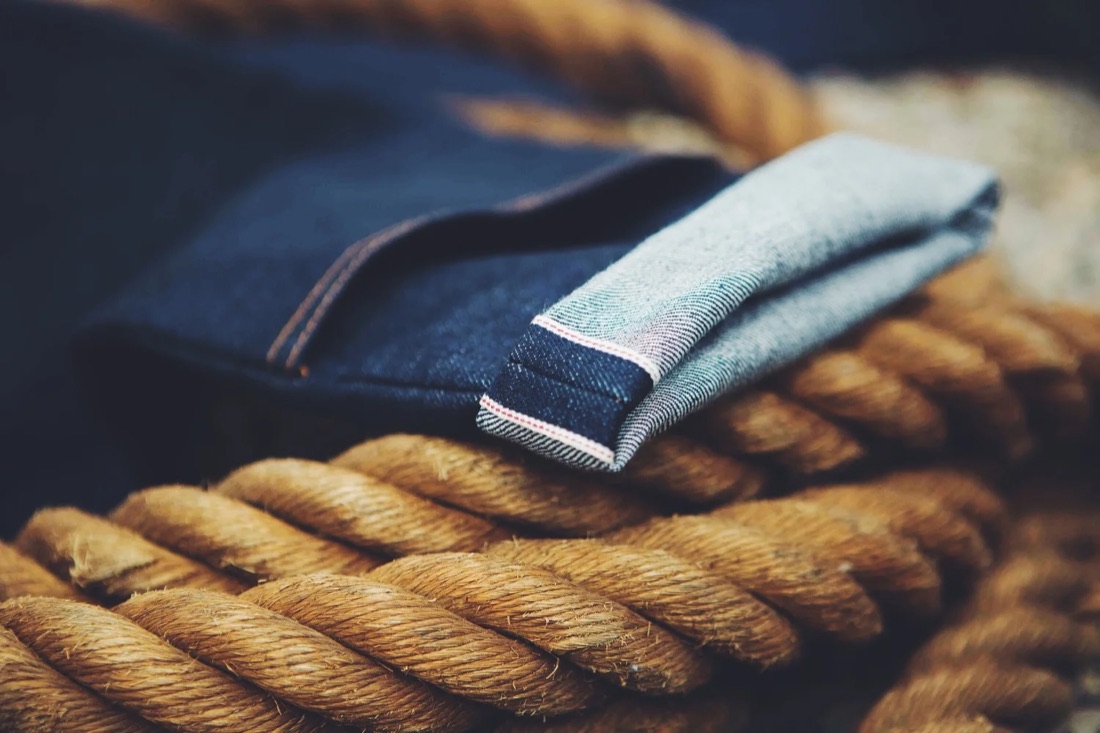
The result, launched in the summer of two thousand fourteen as Gamine Co., was the Slim Slouch Dungaree: a mid-rise jean cut to sit higher in the back for long hours bent over a bed, with big patch pockets that could hold a folding saw, an extra layer of denim at the knees, an open hem to let debris fall out and a cinch strap at the back. It was cut from thirteen-ounce raw redline selvedge woven at Cone Mills’ White Oak plant in Greensboro, North Carolina, and, according to the earliest coverage, sewn at L.C. King Manufacturing in Tennessee, the century-old Pointer Brand factory, which offered to repair the jeans for free. It cost one hundred fifty dollars. Within months, The Boston Globe reported, nearly every size of the first run had sold out, to landscapers, construction workers, sailmakers and a bike mechanic in Calgary.
Bibs, Coveralls and a Vest From the Ground Up
The customers kept writing, and the line grew one considered piece at a time. A Deck Sweater modeled on Navy-issue turtlenecks came in two thousand eighteen, knit fifteen minutes from the shop by Fall River Knitting Mills, a family operation in Fall River, Massachusetts. In two thousand nineteen came the Sargent Dungaree, a high-rise work pant with a gusseted crotch and felled seams, named for the painter John Singer Sargent, whose old studio Johnston used to garden beneath. The Madame X and the wide Carpenter Dungaree followed in two thousand twenty-two. Ann Richardson, the archivist at Dickies, opened the Fort Worth company’s archive to Gamine, which led to the Bobby Bibs, a tribute to the Boston vintage dealer Bobby Garnett, a coverall built on a Dickies archival pattern, and a version of the Dickies painter pant.
The most ambitious piece took a year. In the summer of two thousand twenty, Johnston took a century-old vest made of Brown’s Beach Cloth, a knit work fabric once made from recycled wool in Rhode Island, to the weaver Peggy Hart in Shelburne Falls, Massachusetts. To recreate it regionally, Johnston loaded sixty pounds of raw Dorset wool from Peckham Farm at the University of Rhode Island into her truck, sent it to Green Mountain Spinnery in Putney, Vermont, to be washed and spun, then to Caledonia Dye House in Philadelphia for indigo, then onto Hart’s looms, into a wash at Draper Knitting in Canton, Massachusetts, and finally to a sewist who once made reproduction work clothing at the Coggeshall Farm Museum. The Hope Vest went on sale in December two thousand twenty-one for five hundred dollars. Heddels called it made in the USA from the ground up.
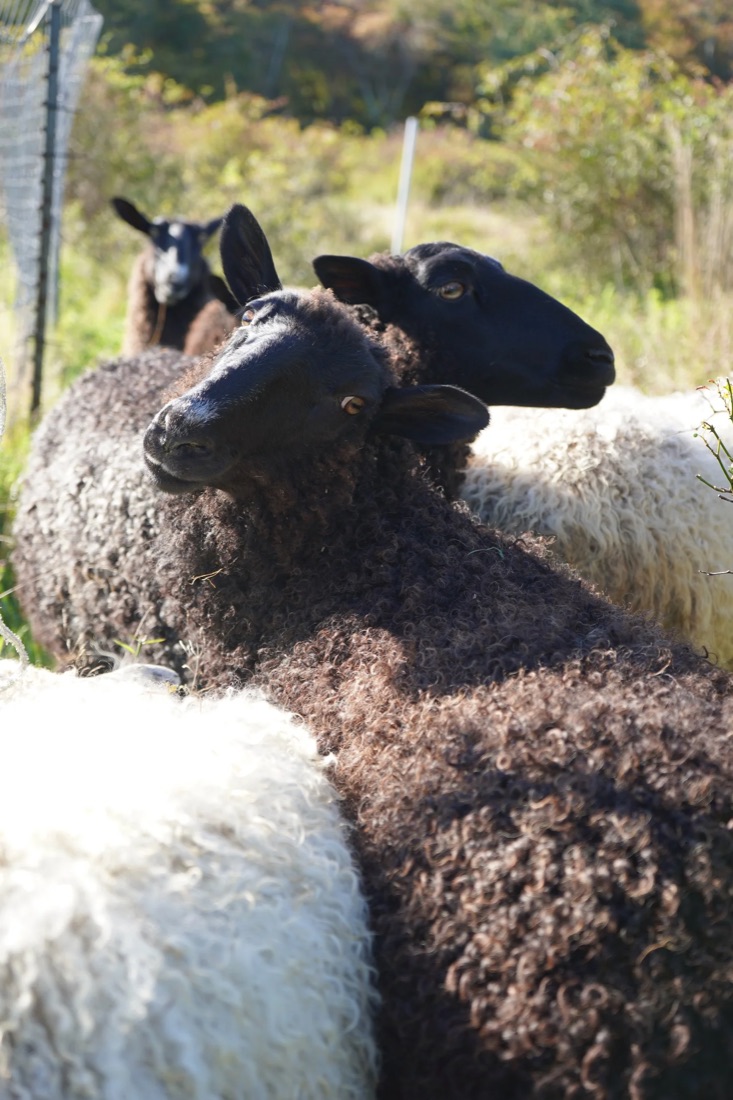
That project pointed the way to where Gamine is now. Johnston keeps her own flock of Gotland, Border Leicester and crossbred sheep, and this fall the brand released watch caps, socks and fingerless gloves knit from that wool blended with fleece from a Dorset flock across town, processed, spun and knit at Still River Mill in Connecticut. A Downeast Sweater uses yarn from Bartlett Yarns in Harmony, Maine, which runs what the brand calls the last spinning mule in the United States.
“I want to make products made to last, not contribute to the waste pile.” Taylor Johnston
The Last Rolls of White Oak
Gamine has spent its whole life building on a supply chain that kept disappearing beneath it. The denim it launched on came from White Oak, the last big American mill weaving selvedge on shuttle looms, and White Oak closed at the end of two thousand seventeen. Gamine bought what it could and used it to the end, and the product pages still count down the last rolls: a black denim with natural fill that “we cannot make this again,” a two-tone White Oak denim for a chore coat. For the Sargent it adopted a near-identical selvedge from Yoshiwa Mill in Japan. For a while it also used selvedge from Vidalia Mills in Louisiana, which ran White Oak’s old Draper X3 looms and traced its cotton to American farms; Vidalia closed in two thousand twenty-four. When Hurricane Helene tore through western North Carolina that same year, it hit the region around Asheville where the organic cotton for Gamine’s thermals is grown and milled, and the brand made a point of staying with those producers.
The sewing rooms have been just as fragile. Johnston writes that since she started she has had a front-row seat to the extinction of small-scale, specialty apparel manufacturing in the United States. Her dungarees have been made in what she describes as an entirely analog small-town Tennessee factory, on machines from the Second World War, by a team of seamstresses who once sewed for Levi’s and Carhartt before NAFTA sent that work south. Other pieces are sewn in Chicago, in Texas and in a New Hampshire studio, wherever she can find a skilled hand willing to take a small run. The company itself has moved with her, from Boston to Cohasset, Massachusetts, to Tiverton and then Little Compton, Rhode Island, and it remains tiny: Johnston designs and manages production, and a community manager, Whitney Deane, a former fit specialist at Bergdorf Goodman, handles fittings and repairs. Much of the line sells out and goes into the archive rather than back into production.
Shoddy Wool, Whalers and the Workwear Archive
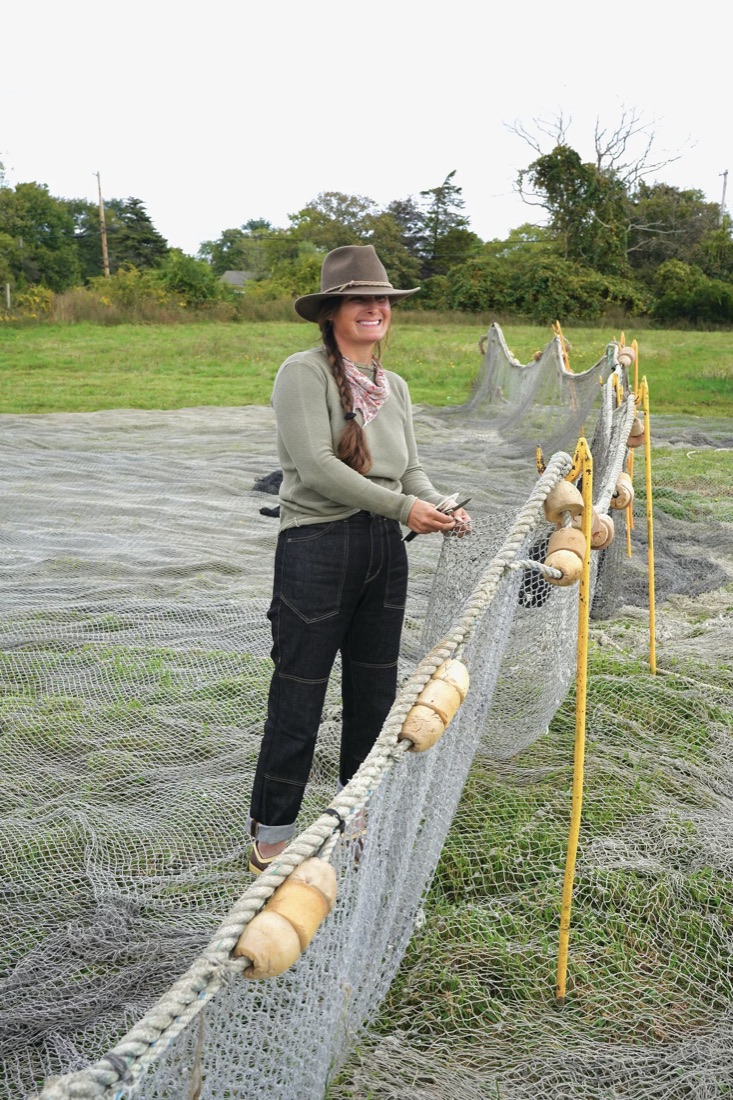
Gamine works inside a very particular American tradition: the plain, durable clothing that New England and the South once made for people who worked outdoors. Johnston calls her research the archaeology of workwear. She collects old pieces from barns, garages and the stock rooms of dealers like Bobby Garnett, the “Bobby from Boston” whose shop drew designers from Ralph Lauren to Tom Ford, and she builds new garments out of what she learns, careful, as she told The Cut, not to end up in a costume. The Hope Vest reached back to Brown’s Beach Cloth, sewn from recycled shoddy wool in Rhode Island mill towns. The Deck Sweaters come out of the maritime archive at Fall River Knitting. A painter pant is named in Portuguese, for the Portuguese community of southeastern New England.
The newest dungaree pulls those threads together. On a visit to Glenn Liburd’s studio, about forty-five minutes from Gamine’s shop, Johnston found the Trinidad-trained tailor and former lead tailor of Levi’s made-to-measure program surrounded by vintage machines, including a Reece buttonholer of the kind developed in Boston. The two designed the Atlantic Dungaree together. Liburd pulled a roll of fourteen-ounce White Oak selvedge from his own archive, and he cuts and sews each pair, doing nearly all of the single- and double-needle work himself. It has custom brass shanks from Waterbury Button, the Connecticut maker founded in eighteen twelve, a fishtail back notch modeled on a humpback whale’s fluke for the region’s whaling history, and a suggestion to start the break-in with a soak in the Atlantic.
“There’s a no-pink clause on our site.” Taylor Johnston, to The Cut
Atlantic Dungaree
Fourteen-ounce White Oak selvedge, cut and sewn by Glenn Liburd in Rhode Island with Waterbury brass and a buckle back. A unisex, mid-rise, wide straight leg, cut long for a proper cuff. Limited run; popular sizes are restocked through the year.
Mock Neck Deck Sweater
The boxy Navy deck sweater in extrafine Merino, knit in Fall River, Massachusetts. Built to go under a pair of bibs at work and still look right in town.
Wool Watch Cap
An undyed, seamless watch cap from the wool of Gamine’s own Little Compton flock and a neighboring Dorset flock, spun and knit in Connecticut. The most direct way to own a piece of the farm.
Go Further
The Bottom Line
Gamine is what happens when the revival is led by the person who actually wears the clothes to work. A gardener who could not find women’s work pants that fit and lasted field-tested her own, built them on American selvedge in small Southern sewing rooms, and has kept chasing the vanishing American supply chain all the way back to the sheep in her pasture. It is small, often sold out and entirely sincere, and it makes a strong case that workwear for women was never a niche, just an empty shelf.