Josh Gustin was in graduate school for his MBA, on the well-worn path that runs from a top business program straight into banking or consulting, when he decided to do something his classmates found baffling. He was going to teach himself how to make the perfect pair of jeans. He loved denim for the most unfashionable of reasons, that it was honest and old, a garment people had been living and working in for more than a hundred years, and he wanted to make something real with his hands. The brand he started carries his own last name, and over the next two decades it would become one of the strangest and most stubborn experiments in American clothing: a premium denim label that almost no store has ever been allowed to sell.
The Banker Who Didn’t
Gustin began in two thousand five, in the margins of Josh Gustin’s business degree. While the rest of his cohort lined up summer internships at investment banks, he spent his learning how denim is woven, cut, and sewn, finding the people in the trade who would teach a curious outsider. “I was drawn to denim because it is a timeless garment that has been a huge part of people’s lives for over a hundred years,” he has said. “I loved the material and the craft of it. I loved making something real.” He was not chasing a trend. He was chasing a single perfect object, and he was willing to rearrange his whole life around it.
With his business partner Stephen Powell, Gustin built the early company the conventional way. They designed classically cut selvedge jeans, sourced the best cloth they could find, and placed the finished product where serious denim was sold: in high-end boutiques across the country, from San Francisco to New York. The jeans were good, the kind of thing a denim obsessive would respect, and they sat on those boutique shelves at upward of two hundred dollars a pair. By every outward measure it was a real fashion brand. From the inside, Josh Gustin was growing convinced the entire system around it was broken.
He had a fashion label on the shelves of the best stores in the country. He decided the stores were the problem.
Six Years on a Boutique Shelf
The heritage Gustin sits inside is not a mill town or a family wash house. It is the ordinary machinery of the fashion business, the wholesale system that every small label is told it must join. A brand designs a season far in advance, shows it to buyers, waits months for orders, produces on faith, ships to stores, and hands roughly half the retail price to the retailer for the privilege of being carried. For about six years Gustin lived inside that system, and the longer it did, the more its founder bristled at it. The timeframes were unmanageable, the structure inefficient, and the markup that pushed a pair of his jeans to two hundred dollars went almost entirely to people who had nothing to do with making them.
The frustration was not with the product, which he believed in, but with everything that happened to it after it left the sewing floor. He kept asking a simple, dangerous question: what would it cost if you stripped all of that out, if the maker sold straight to the person who would wear the jeans, with no store and no markup in between? The answer, it turned out, was less than half. The problem was that no one had built a way to do it without gambling the company on inventory nobody had agreed to buy yet.
One Jean, One Day
The solution arrived from an unlikely direction, a website better known for funding gadgets and indie films. In early two thousand thirteen, Gustin became one of the first apparel companies to relaunch itself on Kickstarter. The pitch was almost confrontational in its simplicity: top-of-the-line, American-made selvedge jeans for well under a hundred dollars, sold directly, with production beginning only once enough people had committed to buy. The campaign went live on the seventh of January with a goal of twenty thousand dollars. It cleared that goal in under twenty-four hours.
It did not stop there. By the time the campaign closed it had raised nearly four hundred and fifty thousand dollars from four thousand and ten backers, with orders for nineteen different styles. A small denim label that the wider world had never heard of had just run one of the most successful fashion campaigns the platform had seen, and it had done it by promising to undercut its own retail price by more than half. “We are turning the fashion industry on its head and breaking all the rules,” Gustin said at the time. “We are offering the highest-quality product, crowdsourced, and delivered at wholesale prices.” The bet had been that ordinary buyers were ready for an alternative to the boutique. The bet paid in full, in a single day.
Make Nothing Until It Is Sold
Kickstarter was the proof of concept; the real company came next. On the first of April, two thousand thirteen, Gustin launched its own platform at weargustin.com and ran it on exactly the same logic. Every new fabric goes up as its own small campaign. Customers back the ones they want, the company collects the card but does not charge it until the item is funded, and once a campaign reaches one hundred percent, Gustin orders the cloth and cuts and sews only the pieces that were actually backed. Nothing is made on speculation. There is no warehouse of unsold jeans, no markdown rack, no season that flops and sinks the company.
That single mechanism let the line compound quickly. Within months the catalog grew past denim into Japanese oxford shirts, and from there into jackets, chinos, knits, and accessories, a full menswear range built one funded campaign at a time. The denim itself became a rotating library of cloth, dozens of selvedges a year from different mills, far more variety than any inventory-carrying brand could risk. The trade-offs are real and the company is plain about them: you wait several weeks for your order, and because nothing extra is made, there is often no spare stock to swap a size. Gustin’s argument is that the wait is the price of the value, and that a buyer who would rather have the markup back than have the jeans tomorrow has been waiting a long time for someone to offer the deal.
What You Get for Eighty-One Dollars
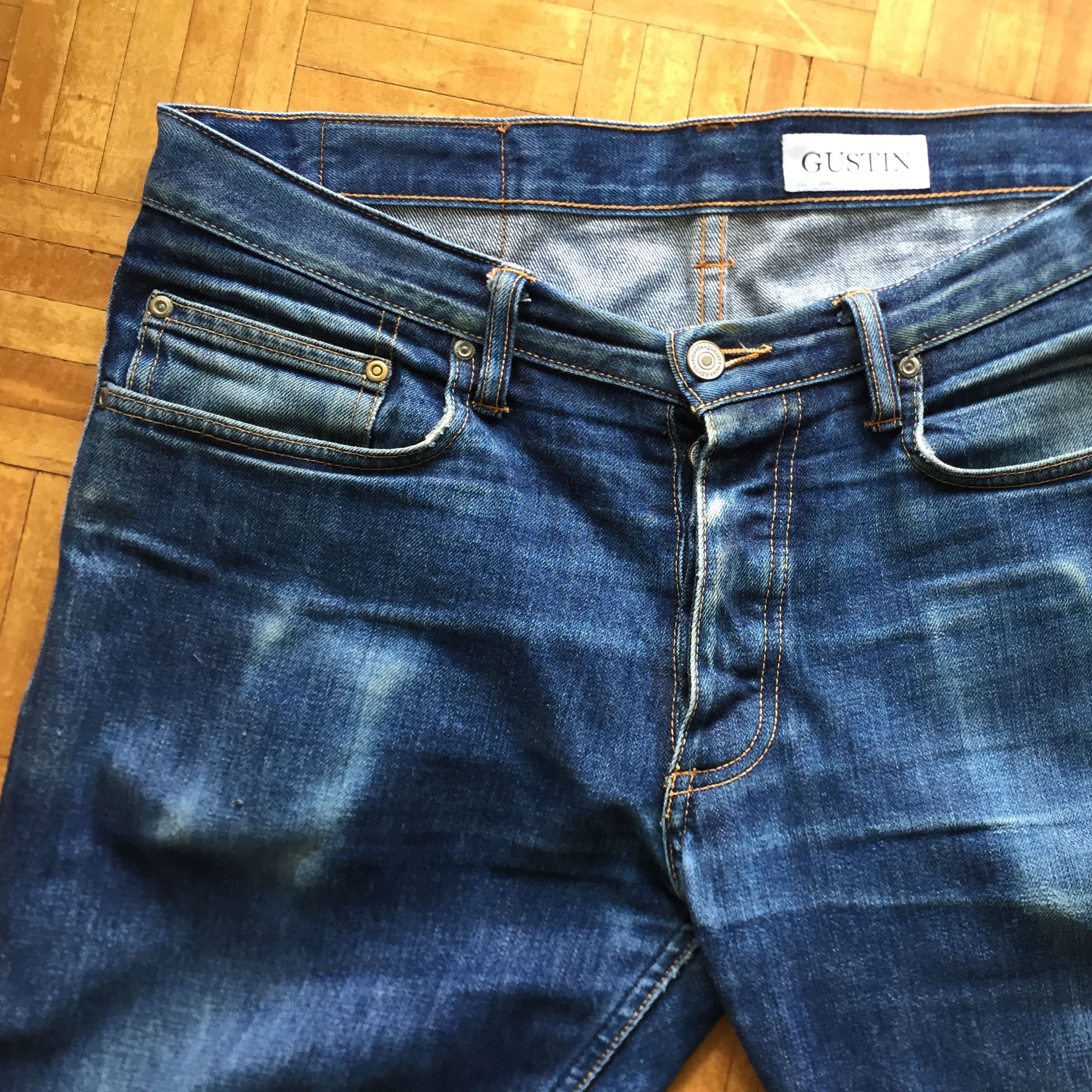
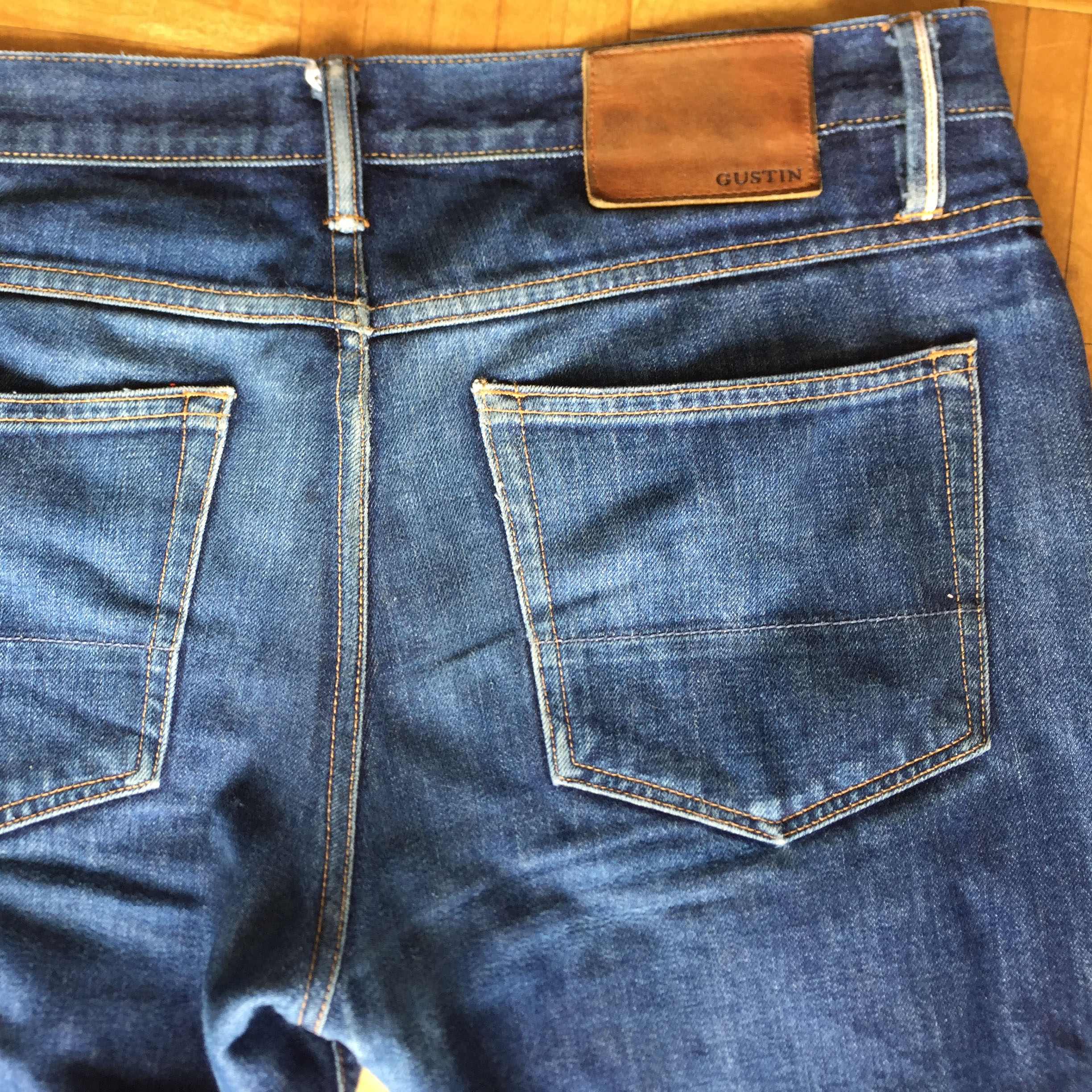
The jeans that started it all sold for eighty-one dollars, shipped, against a boutique price of two hundred and five, and the reviewers who pulled them apart found the math mostly honest. The denim is real selvedge, the hardware is custom and branded, the stitching is clean, the felled inseams and tucked belt loops are the marks of a careful factory. What the lowest prices buy you, the same reviewers noted, is the cloth cut and sewn well in America and little else: not the years of fabric research a brand like Tellason pours into one proprietary denim, not the deep, road-tested knowledge of how a single cloth will fade, and not the comfort of inventory waiting to fix a bad fit. Gustin trades that depth for breadth and for price. For the buyer who wants a well-made American-sewn pair of raw selvedge without the markup, and who can wait a few weeks to get it, it is one of the easiest entry points into the whole world of this denim.
Raw Selvedge Jean, Japan
A straight or slim raw Japanese selvedge, the heart of the line, cut and sewn in the Bay Area. The simplest way to test whether the wait-and-save model is for you.
The 1968, Cone Mills Selvedge
A house classic built on American Cone Mills selvedge, for the buyer who wants domestic cloth and the most recognizable Gustin cut.
Japanese Oxford Shirt
The button-down that proved the model worked past jeans: a Japanese cotton oxford that once retailed near two hundred dollars. For anyone easing in below the price of a pair.
Go Further
The Bottom Line
Gustin is the made-in-America case argued through the cash register. An MBA who would rather make jeans than money decided the markup, not the manufacturing, was the thing worth killing. The cloth travels in from Japan and Italy and a dwindling stock of American selvedge; the cutting and sewing stay in the Bay Area; and nothing gets made until someone has agreed to buy it. It is a narrower promise than reviving a mill, and a sharper one: that the reason American-sewn clothing feels expensive is mostly everything that happens to it after it is sewn.