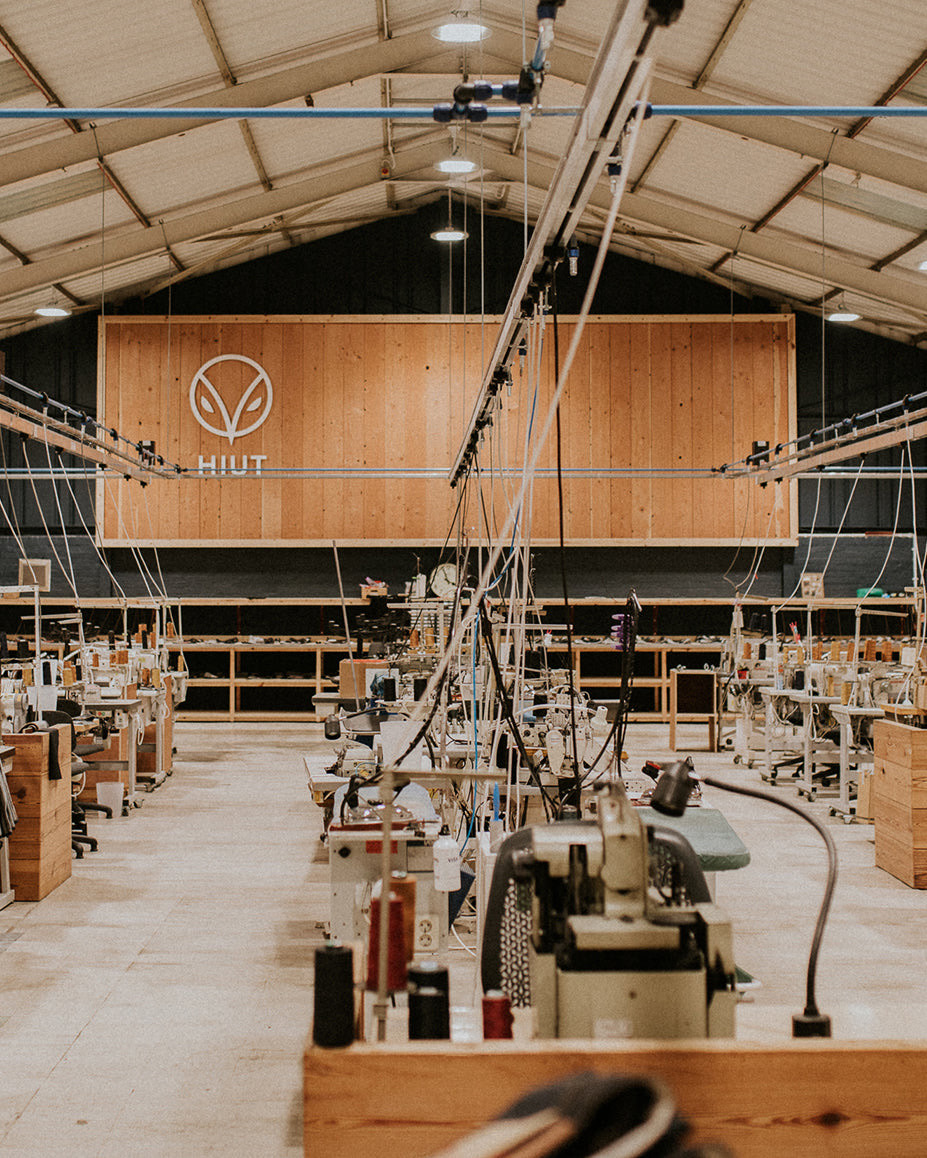
Like Blackhorse Lane in London, this is a story from the other side of the Atlantic, and it asks the question every American maker in these pages is asking. What does a town do after the factory leaves? Cardigan, on the west coast of Wales, has about four thousand people. For almost forty years it was home to a jeans factory that turned out thirty-five thousand pairs a week for Marks & Spencer. In two thousand two the work moved to Morocco to cut costs, and four hundred jobs went with it. Ten years later a local couple opened a jeans factory in the same town with the stated aim of getting all four hundred back. They have not got there. What they built on the way is one of the most copied small brands in denim.
The Town That Made Jeans
The old factory was, by Hiut’s account, Britain’s biggest jeans factory. Its machinists sewed for the country’s biggest high street name, week in and week out, and at its peak about one in ten people in Cardigan worked there. When it closed, the skill did not leave with the machines. The machinists stayed in the town, some for the rest of their working lives, carrying decades of jeans-making in their hands with nowhere to use it.
That is the raw material Hiut was built on. One of the machinists Hiut now calls its Grand Masters, Claudio Belotti, started making jeans in nineteen sixty-eight and has fifty-eight years at it. Another, Elin, has forty-three. Jean, born and raised on a family farm outside Cardigan, has forty-one. Asked what home means, Claudio names the view of the river Teifi flowing out into Cardigan Bay. The Welsh name for Cardigan, Aberteifi, now sits under the Hiut wordmark.
The Couple from Howies
David Hieatt came out of advertising. In nineteen ninety-five he and his wife Clare started Howies, an outdoor clothing label named for Clare’s maiden name, Howells, and ran it from Cardigan. They remortgaged their house twice to keep it going. In two thousand seven, when it had about twenty staff in the town, they sold it to the American company Timberland, and David left in two thousand nine. In between, in two thousand eight, the couple started the DO Lectures, a small ideas festival held on a farm in west Wales, which gave David a platform for the thing he kept coming back to: making something well and telling its story straight.
The idea for Hiut came from a line a Howies designer, Gideon Day, said to him: it’s not about you, it’s about the town. The town had lost its jeans factory. The people who had worked there still had the skill. So the Hieatts would start a jeans company in Cardigan, hire the people who used to make jeans there, and grow it until the four hundred jobs came back. They named it for the first two letters of Hieatt and the word utility. “Where better to locate ourselves,” David told the BBC, “than in a town with a history of jeans-making, where the expertise remains?”
“Our aim is to get 400 people their jobs back. If you ask me when is that going to happen, the honest answer is I don’t know.”
Do One Thing Well
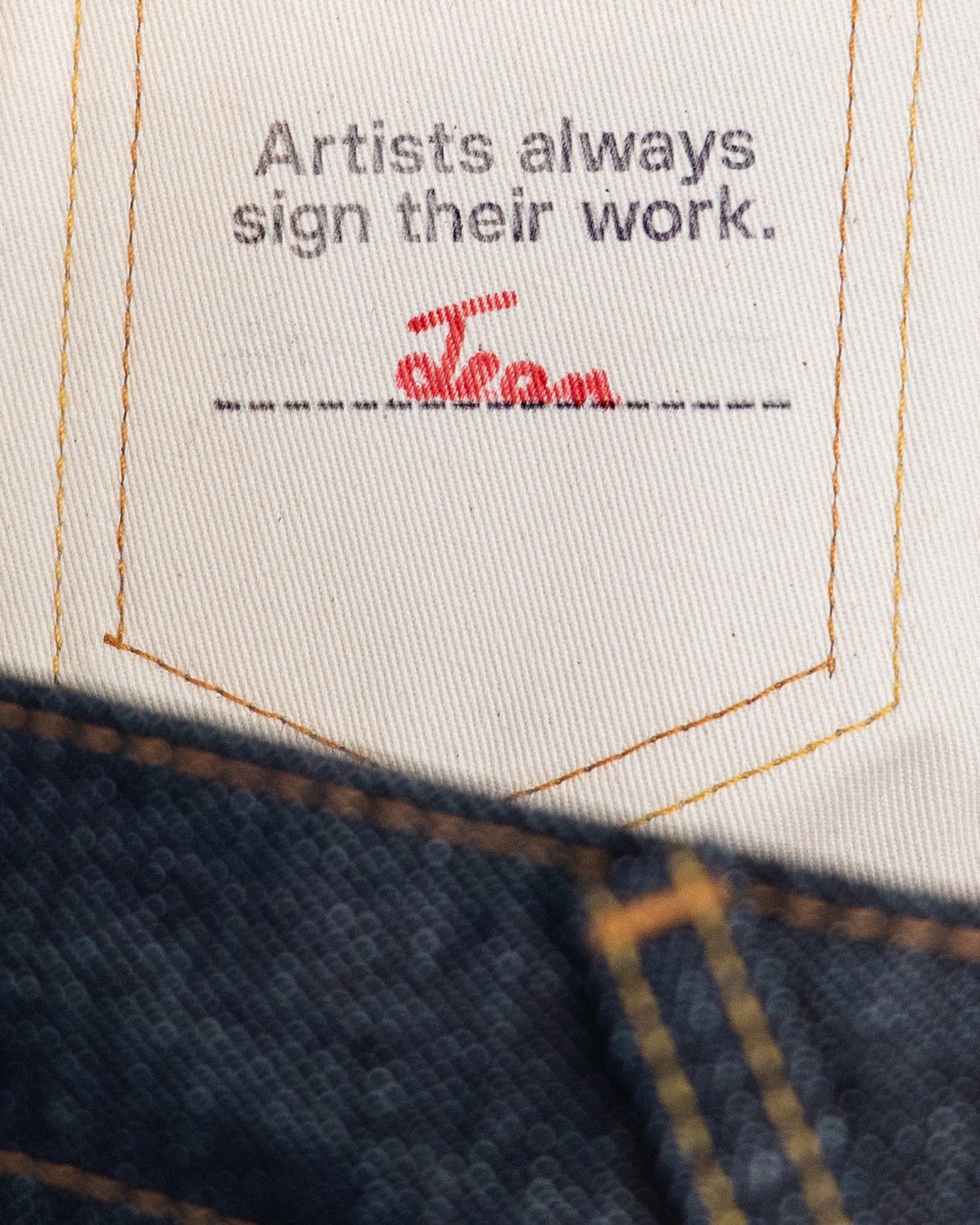
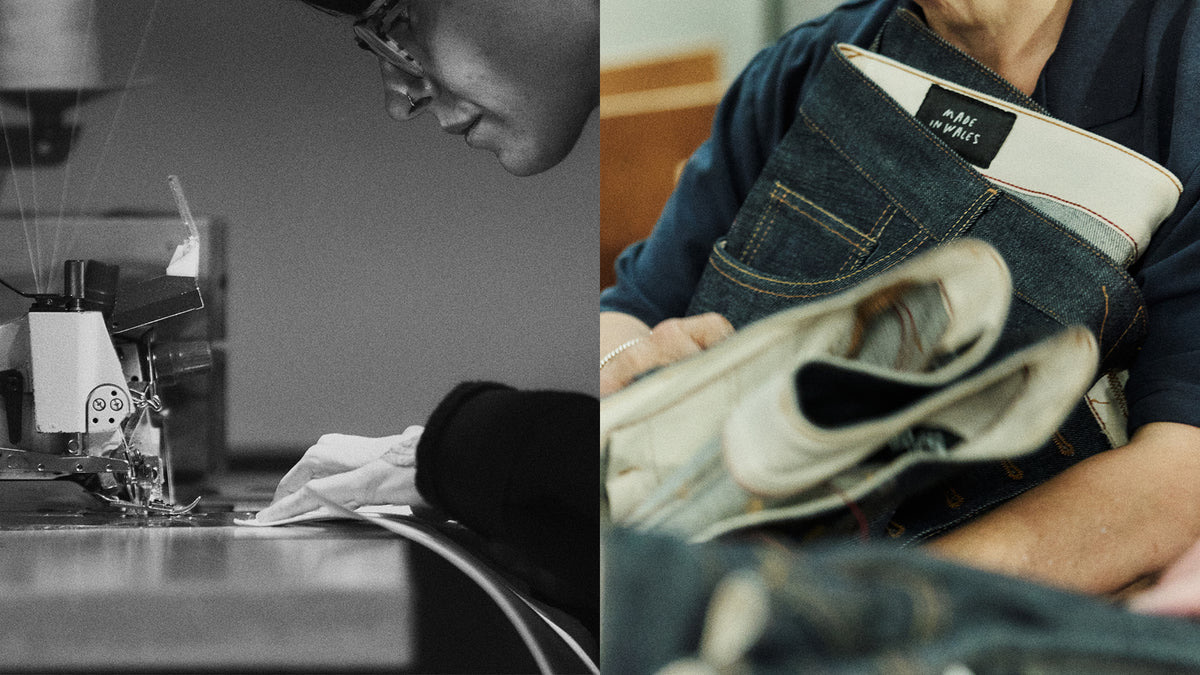
Hiut made one product and said so. “We only make jeans. We say no to anything else. Be narrow. Be good.” The early range was short: a Japanese selvedge from the Kuroki mill in Okayama, an organic denim from ISKO in Turkey that took more than a year to develop, and a handful of fits. The spark was not a single jean but the way every pair was made and sold. One machinist makes each pair from start to finish rather than sewing the same seam all day, which takes about an hour and ten minutes against eleven minutes at a mechanized giant. New machinists train for three years before they sew for a customer. And every maker signs the pocket bag of the pair they made.
In the spring of two thousand twelve Hiut added the History Tag, a code on each pair that links to a page where the owner can see who made it and add their own photographs over the years, a diary of one pair of jeans. Grand Master Jean still remembers the first shipment. “It was very exciting and emotional seeing the name of the first people to receive our jeans. 1 to 100. I still remember who had no.1.” The rest of the house rules followed from the same instinct: free repairs for life, and a No Wash Club asking owners to go six months before the first wash, on the argument, which David has made on the REWORK podcast, that most of a jean’s environmental cost comes after it leaves the factory, in the washing machine.
None of it would have worked through shops. Hiut sold direct, from its own website, to people all over the world. “Without the internet we’d have been dead within 12 weeks,” David told the BBC in two thousand seventeen. “The internet allows us to sell direct and keep the margin. It enables us to compete.” He used his advertising years the same way, sending jeans to people who would talk about them. A pair sent to the Danish chef René Redzepi brought a run of orders from Denmark.
The Duchess and the Waiting List
By the end of two thousand seventeen Hiut had fifteen people making about one hundred twenty pairs a week and was shipping a quarter of them abroad. Then in January two thousand eighteen Meghan Markle, newly engaged to Prince Harry, walked through Cardiff in a pair of black Hiut Dina jeans. “The website went absolutely crazy,” David said at the time. “We have a back order waiting list for three months. We are having two more people in and we’re moving to a new factory.” The demand was so heavy that Hiut stopped launching new products for a year to catch up.
The new factory had history of its own. That spring the Independent reported that Hiut would move in June into the old denim factory itself. Today the company’s address is The Old Jeans Factory, Bath-House Road, Cardigan, with a factory shop and free tours. The staff grew into the mid twenties. The range grew in the ways that suited a company that only makes jeans: a Landfill Dropout line sewn from cutting-room scraps, and Déjà Blue, which takes back customers’ old pairs for a fifty pound voucher, repairs them, and sells them again.
How It Is Made
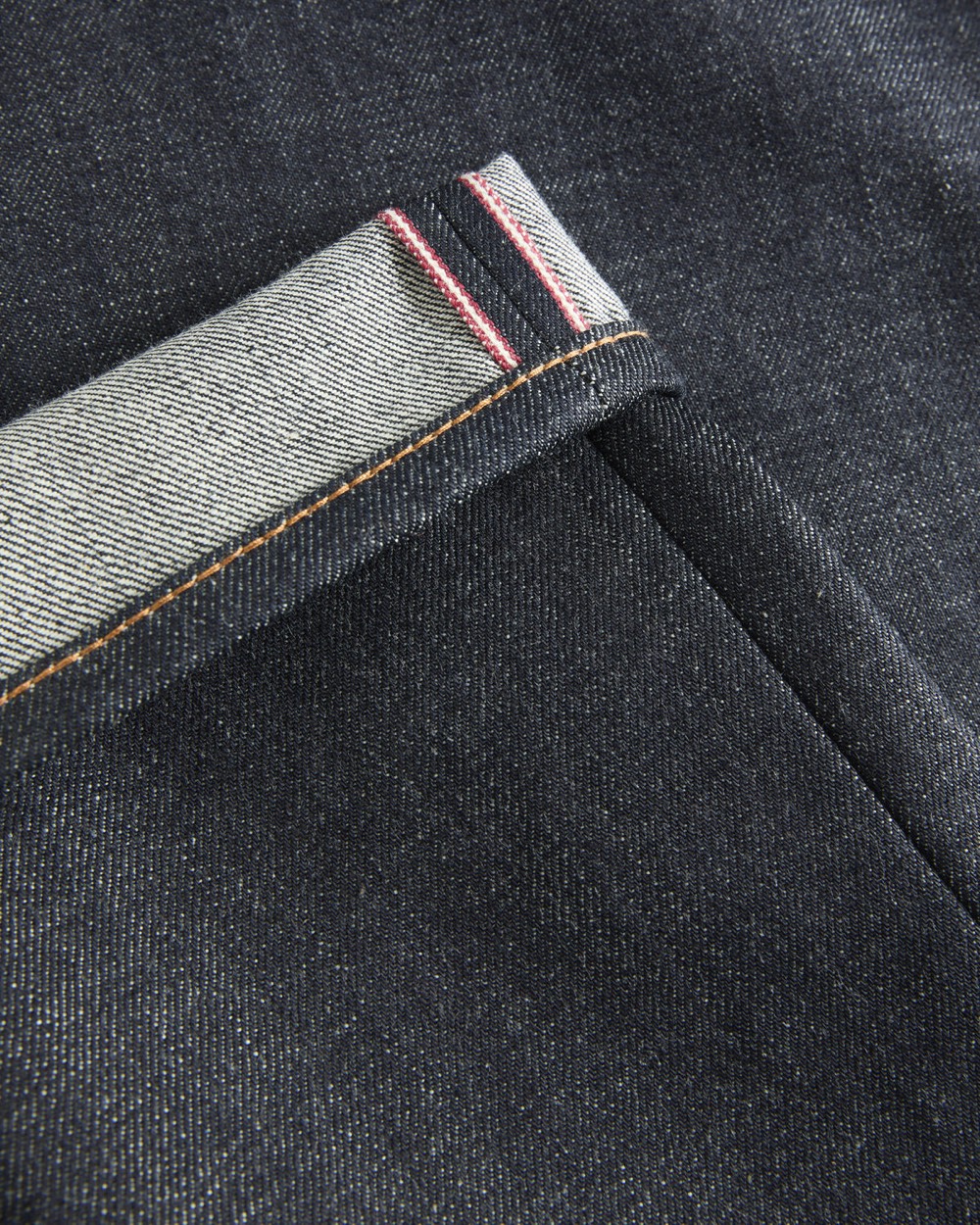
Britain has no denim mill of scale, so Hiut buys its cloth abroad and names every mill. The OG Selvedge is a fourteen and a half ounce red-line selvedge from Kuroki in Okayama, Japan. The Summer Wash Selvedge is fifteen ounces from Kaihara, also in Japan. The Organic is a twelve ounce GOTS-certified organic cotton denim from ISKO in Turkey. The Rinse and Soft Wash jeans are thirteen ounce regenerative cotton from Candiani, outside Milan. Every pair is cut from paper patterns and sewn in Cardigan. The raw and rinse jeans are finished there; the washed finishes are done by LaundRe, a laundry in London. The origin of the cotton beyond organic and regenerative, and of the rivets, buttons and labels, is not published.
A Fight to Stay in Business
A company that sews each pair by hand, in Wales, and sells mostly one kind of garment has very little room when costs rise. The move to the bigger factory had left the company in debt. In March two thousand twenty-four Hiut published an unusual appeal it called Wanted: 30 Believers. It asked thirty customers for fifty thousand pounds each, one and a half million in all, to pay down the debt from the factory move and fund one new idea a year. The terms were built around a promise not to grow: output capped at ten thousand and eleven pairs a year, repayment at fifty pence per pair sold over ten years, and the Hieatts on nominal salaries and no dividends until the lenders were paid back. “The desire for products may grow,” the company wrote, “but not production.”
It did not end the struggle. In September two thousand twenty-five the Hieatts announced they were leaving the company they had started. “The last couple of years have been, let’s say, a fight to stay in business,” they wrote. The rescue had come from customers: a family who had visited the factory on holiday, believed in a town that made jeans again, and invested the previous December. “They saved the business.” The family’s holding company, EAAVL, based in northern Germany, took full ownership in a deal the Hieatts’ lawyers date to December two thousand twenty-five, and Johann von Loeper became chief executive.
“The last couple of years have been, let’s say, a fight to stay in business.”
The new owners have kept the factory in Cardigan and the machinists at their machines. In February two thousand twenty-six the Princess of Wales visited the factory and met the trainees. In April came a new men’s and women’s line with the fits renamed (the SlimR became the Finn, the Work jean the Jerald), and a new identity by the design firm Pentagram that puts the town’s Welsh name under the brand’s. The four hundred jobs are still a long way off; the last headcount Hiut has published is under thirty. David Hieatt answered that question in two thousand seventeen, and the answer still stands. “I believe in compound interest. Small things over time gather huge numbers.”
The Benjamin, OG Japanese Selvedge
A tapered fit in fourteen and a half ounce red-line selvedge from Kuroki, with a button fly. The heart of the house, and the pair to break in yourself.
The Jerald, Organic Denim
The old Work jean under a new name: a straight leg in twelve ounce organic cotton from ISKO. The easiest way in, at the lowest price in the range.
The Mari, Organic Denim
A high-rise slim fit in the same organic cloth, the closest thing in today’s range to the Dina that started the waiting list. Also made in the Kuroki selvedge.
Go Further
The Bottom Line
Hiut set out to win back four hundred jobs and has, so far, won back a few dozen at most. It proved that a town that lost its factory could make jeans good enough for the whole world to order, and it learned how hard it is to pay for that. The cloth comes from Japan, Italy and Turkey. The making, the signing, and the mending are still done in Cardigan, now under owners who first came to the factory as customers.