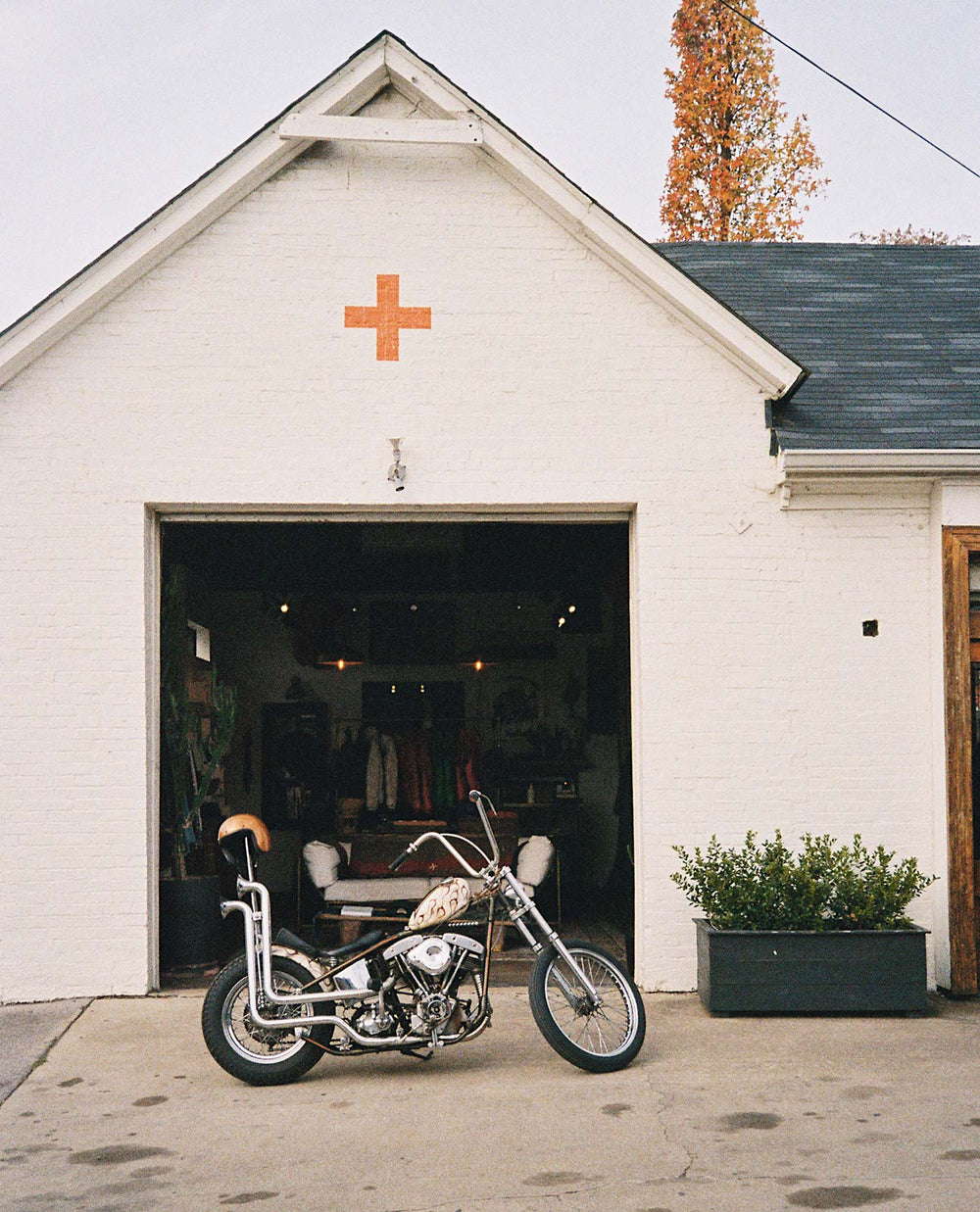
In the summer of 2009, with the economy on the floor, Matt and Carrie Eddmenson opened a denim shop inside a former gas station in the 12South neighborhood of Nashville. The pumps were gone. The service bays became a showroom. A workbench that had belonged to Carrie’s grandfather became the sales counter. They named the brand after her grandparents, Imogene and Willie.
The name was not a marketing flourish. It was a family ledger. Carrie grew up inside the denim business. Her father ran Sights Denim Systems in Henderson, Kentucky, a wash house that finished jeans for Levi’s, Girbaud, and Lucky Brand and, at its height, employed around fifteen hundred people. She started on the floor as a girl, and in her twenties spent nearly four years in Istanbul helping run a sister factory. When Sights closed in the late 2000s, it did not end her denim life. It started a new one. Imogene + Willie grew out of the wreckage of a family mill.
When we first started Imogene + Willie, we were very rigid in our approach to authenticity, quality, and of course, the denim itself.
That rigidity was the point. The American heritage-denim revival was only just gathering then, and Imogene + Willie became one of its anchor names: jeans cut and sewn in the United States, in the brand’s own Los Angeles sewing room, at a moment when almost no one was sewing jeans here at all. The shop told the same story the label did. Subway tile, old machinery, and a counter built from a workbench. Made by people, on purpose, close to home.
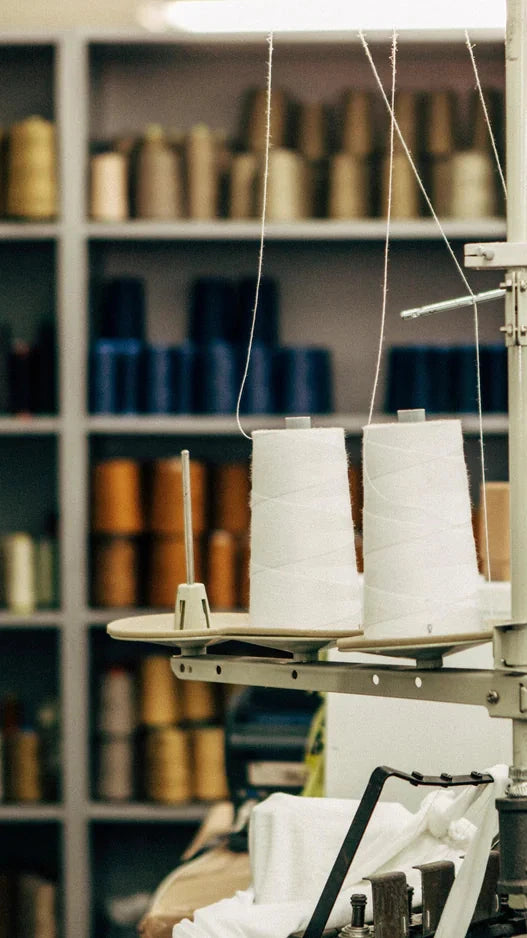
The fifteen years since have not been gentle. The brand came through a bruising stretch of investor disputes and a 2016 restructuring, the kind of financial turbulence that has sunk plenty of small American makers. It survived, with Matt and Carrie’s founding conviction intact and K.P. McNeill joining as a partner and chief executive in 2018 to help carry it forward. The denim, and the standards behind it, never wavered.
The Cotton Project
The most interesting thing Imogene + Willie is doing now is also the most literal expression of the rebuild this publication exists to document. The Cotton Project, begun in 2021, set out to make a garment entirely inside a four-hundred-mile circle drawn around Nashville. Not sourced loosely from American suppliers. Grown, spun, woven, dyed, and sewn within a day’s drive.
The cotton is grown at Martin Farms in Courtland, Alabama, regeneratively, on a single field managed by Larkin Martin, a seventh-generation farmer. To be sure the grower was paid properly, Imogene + Willie bought the entire crop, at roughly twenty-five percent above the market rate. The fiber is spun at Hill Spinning Mill in Thomasville, North Carolina. For the denim, released in 2025, the cloth is woven at Mount Vernon Mills in Trion, Georgia, on what the company calls the last remaining rope-dye range in the country, and colored not with synthetic dye but with plant-based natural indigo from Stony Creek Colors in Springfield, Tennessee.
By seeing through the entire process from planting a seed to releasing a garment, we want to challenge the prevailing model of exporting American cotton overseas for production.
This is the whole argument of Denim Dispatch rendered as one pair of jeans. The United States grows cotton and ships most of it abroad to be spun, woven, and sewn, then buys the finished clothes back. Imogene + Willie’s answer is to refuse the round trip, to keep every link within a few hours of the last, and to pay the farmer more rather than less for it. It is small. One field, one spinner, one mill, one dye house. But existence proofs are how a supply chain comes back, one verified link at a time.
The Elizabeth
The high-rise women’s signature, in heavyweight stretch denim. Where most people who already know the brand begin.
The Henry
The relaxed, classic men’s cut: sits at the hip, roomy through the thigh, a 1950s-era fit that is easy to live in. The forgiving way into the brand.
Cotton Project Natural Indigo
The seed-to-garment jean from this story: American cotton, woven in Georgia, dyed with plant indigo from Tennessee.
Cotton Project Tee
The lowest-cost way in, on the same four-hundred-mile supply chain as the denim. A two-pack runs about $98.
Go Further
The Bottom Line
One Nashville denim brand, honestly: founded in a gas station out of a family’s lost mill, battered and rebuilt, and now betting that the most radical thing it can do is make a pair of jeans the slow, local, American way. We will be watching where the Cotton Project goes.