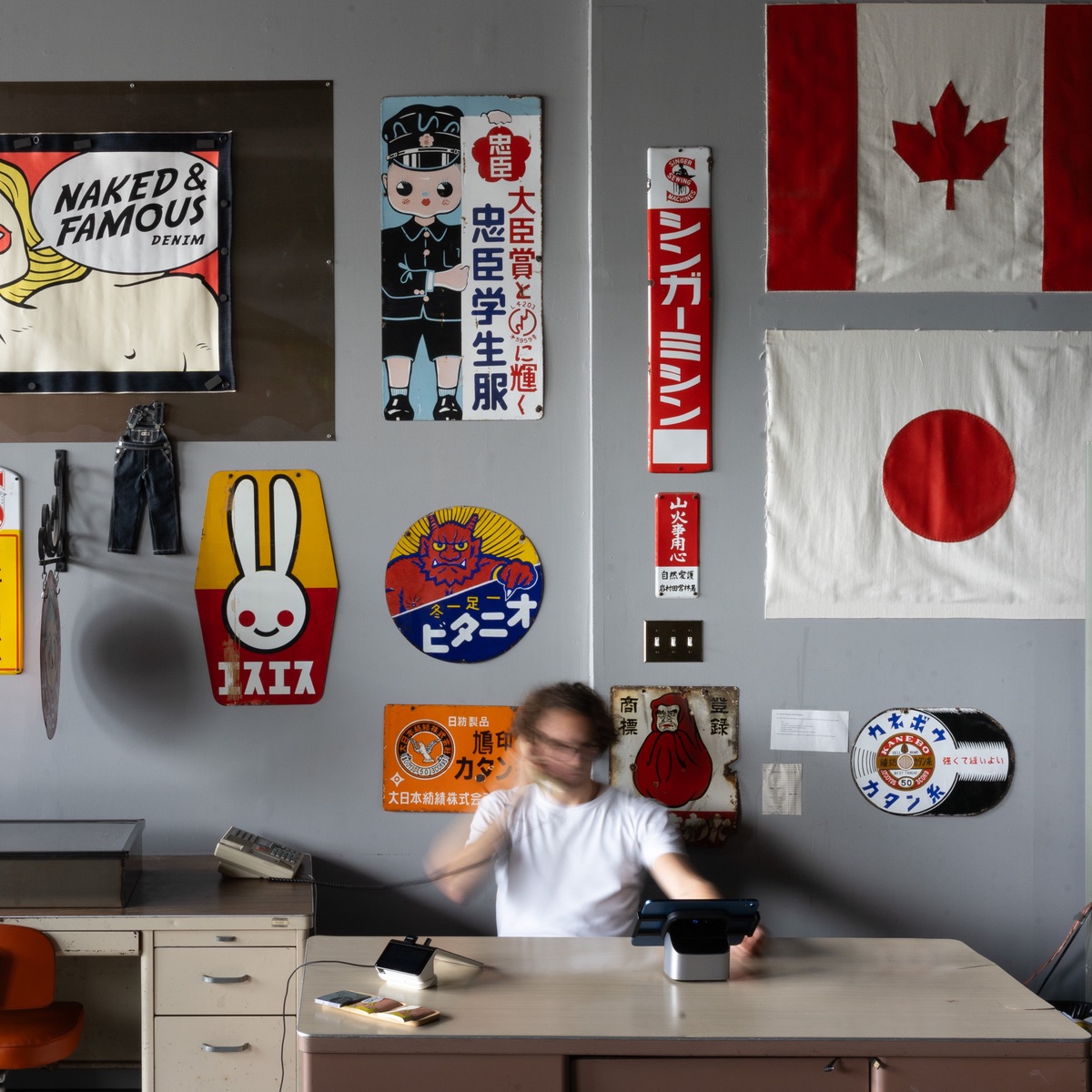
Most of the makers in these pages are working on the same question: can jeans still be sewn at home, by people paid a living wage, and sold at a price ordinary people will pay? An hour north of the New York border, on a stretch of Boulevard Saint-Laurent in Montreal’s old garment district, a company has been answering yes since two thousand eight. Naked & Famous Denim buys its cloth in Japan, cuts and sews every pair of its jeans in Quebec, and sells most of them outside Canada, from its own flagship in New York to shops around the world. Its founder is the third generation of his family to make clothes in that district, and he has watched most of the neighbors close.
Three Generations on Chabanel
Montreal was once the center of Canada’s clothing trade. The rag trade filled downtown loft buildings from the nineteen twenties, giving work to generations of immigrants, most of them women, and then moved north to Rue Chabanel, where eight big factory buildings went up between nineteen sixty-four and nineteen eighty-five. The largest, 333 Chabanel, holds about a million square feet. As late as nineteen eighty-seven, apparel manufacturing employed three percent of everyone working in Quebec.
Brandon Svarc’s grandparents were Holocaust survivors who arrived in Montreal with nothing, McGill News reported last year, and his grandfather founded the family’s garment company. It made the clothes nobody photographs: uniforms, hunting wear, prison uniforms. Brandon’s father, Alan, worked in the business by day and earned his McGill commerce degree at night. When Brandon was born, his father started a denim label and named it after him. The son grew up on the factory floor and never really considered anything else. “It’s in my blood,” he says.
No Celebrities
Svarc took his own commerce degree at McGill, in finance, in two thousand four, and worked in fashion public relations before he started a brand. He came of age in the years when premium denim meant celebrity. Jeans were sold on the famous people who were paid to wear them, and they arrived already faded, sanded and torn. He thought the money was going to the wrong places. Paying for jeans that had been beaten up in a factory, he told Heddels, was like buying a Ferrari covered in rust and scratches.
Pre-distressed jeans, Svarc says, are “a Ferrari covered in rust and scratches.”
The plan he described was to study what the famous brands did badly and do the opposite. The name itself is the joke: it was meant to sound like one more Hollywood label while mocking the whole category. By two thousand twelve he had boiled the company down to four rules for Hypebeast. Make it in Canada. Use Japanese fabric. Keep it raw. And spend nothing on the rest: no advertising, no sales reps, no free jeans. When a stylist asked for a free pair for Justin Bieber, Svarc sent the stylist to a store. The money not spent on any of that went into the cloth and the sewing, and into a price below the designer labels he was mocking.
Glow in the Dark
Naked & Famous launched in two thousand eight, as the financial crisis hit. What made people notice it was not the plain raw jeans but the cloth Svarc talked Japanese mills into weaving. There was denim that glowed in the dark, and denim that changed color with body heat. In two thousand twelve came a twelve-and-a-half-ounce indigo laced with raspberry-scented microcapsules, a scratch-and-sniff jean. Later he tried stainless steel, cashmere and denim woven with milk fiber. Early on he asked an American mill for a cashmere denim and was turned down. The mills in Okayama said yes. Svarc says they resisted his ideas at first and came around once the orders were big enough. Seventeen years on, he says, they know he is a crazy weirdo and look forward to what he asks for next.
The stunt that defined the brand was weight. Ordinary raw jeans weigh about fourteen ounces per square yard. In two thousand twelve, after two and a half years of development, Naked & Famous released a thirty-two ounce selvedge woven on vintage shuttle looms from yarn the company compares to carpet or sailboat yarn. Only two pairs could be made in a day. Svarc told Hypebeast the company made one hundred forty pairs and broke three machines and twenty-five needles doing it. The tagline was a dare.
“Guaranteed uncomfortable or your money back.”
The Hard Stuff
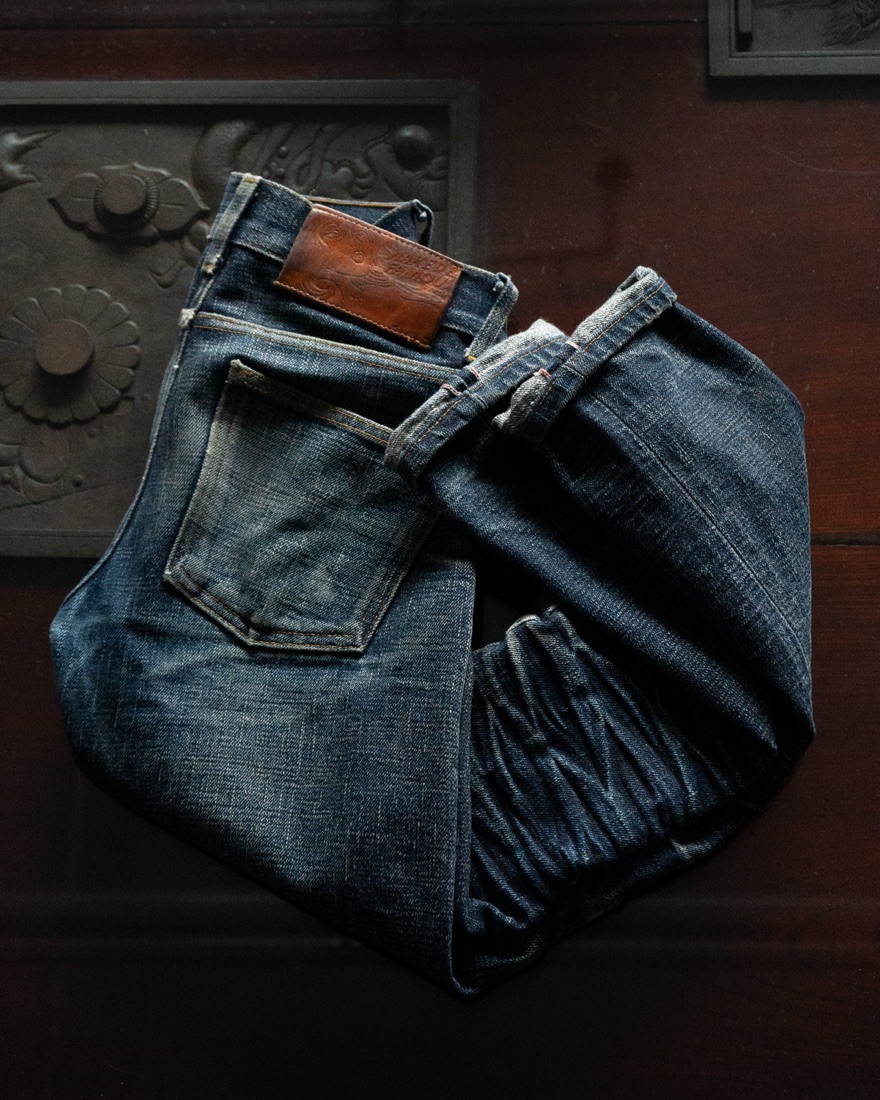
The stunts got attention. The steady sellers paid the bills. In two thousand seventeen Svarc named the two jeans he had sold year-round for about a decade: the Left Hand Twill Selvedge, a soft cloth that fades in vertical streaks, and Black Power Stretch. Then came the Elephant series, heavy selvedge at a fair price, which built a following of its own. When fans on Reddit asked for Elephant 2 to come back, the company brought it back, and it has done so again this fall. In a typical season the brand releases up to twenty new fabrics, which Svarc says is more than any other denim brand, and each one is a reason for the faithful to buy another pair.
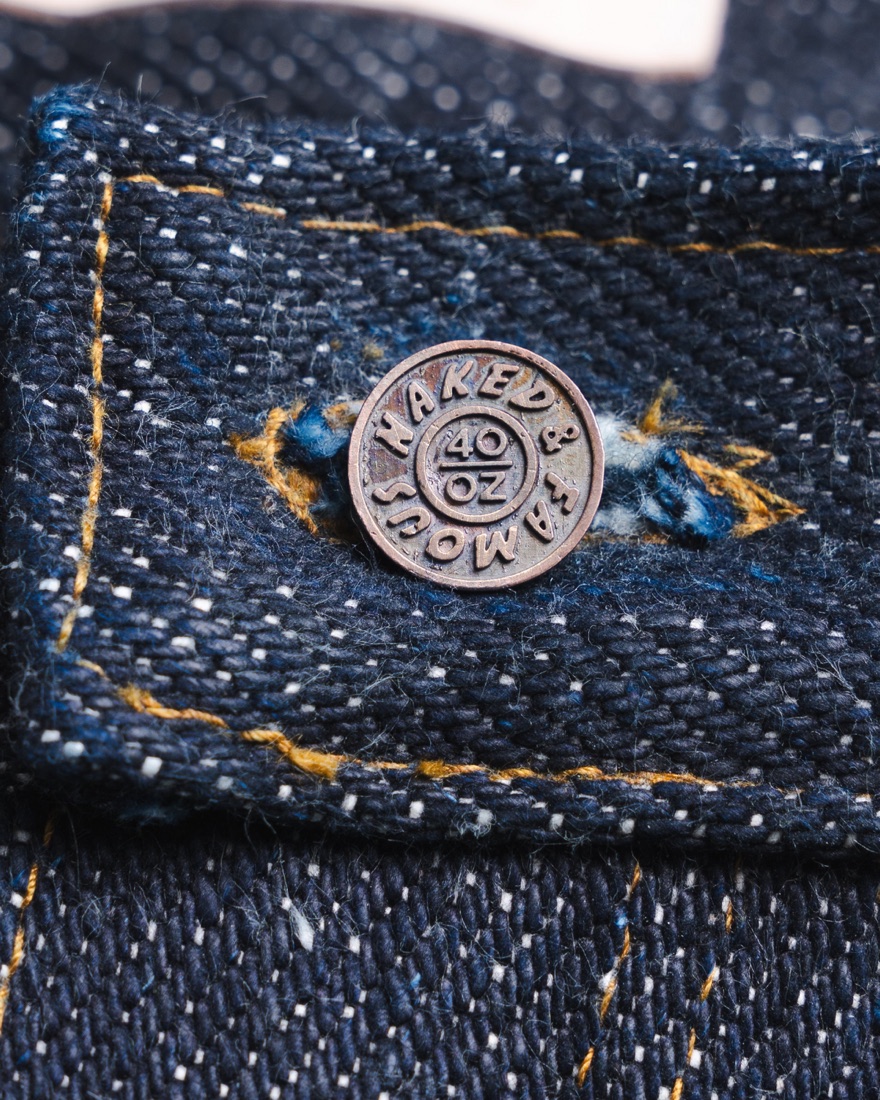
The rest of the business grew around the jeans. Tate + Yoko, the company’s own store, opened in two thousand eleven in the old core of Montreal’s needle trade and hems jeans for free. A Made in Japan line, sewn in Japan rather than Quebec, arrived in two thousand fifteen. In two thousand eighteen a flagship opened in SoHo, with raw-denim floor tiles that fade under customers’ feet. There are now women’s fits, shirts, jackets, knits and leather goods, and a Wall of Fade at the factory of old pairs worn in by friends and family. In March two thousand twenty-five the company pushed weight one more step with a forty-ounce selvedge woven on modified shuttle looms. It took two sewing operators several days to make one pair.
Some of the newest cloth starts in American fields. The Leatherface Selvedge, a Halloween release last fall, is woven from Texas-grown cotton. The Sea Island Selvedge uses an American-grown strain of the old extra-long-staple Sea Island cotton, which nearly vanished in the nineteen twenties and was replanted in Texas and New Mexico from vaulted seed in two thousand fifteen. Several cloths are woven from FoxFibre, the naturally brown and green cotton that the California breeder Sally Fox has been developing since the nineteen eighties, so the color comes from the plant rather than a dye. Grown in America, woven in Japan, sewn in Quebec, and sold back to Americans.
How It Is Made
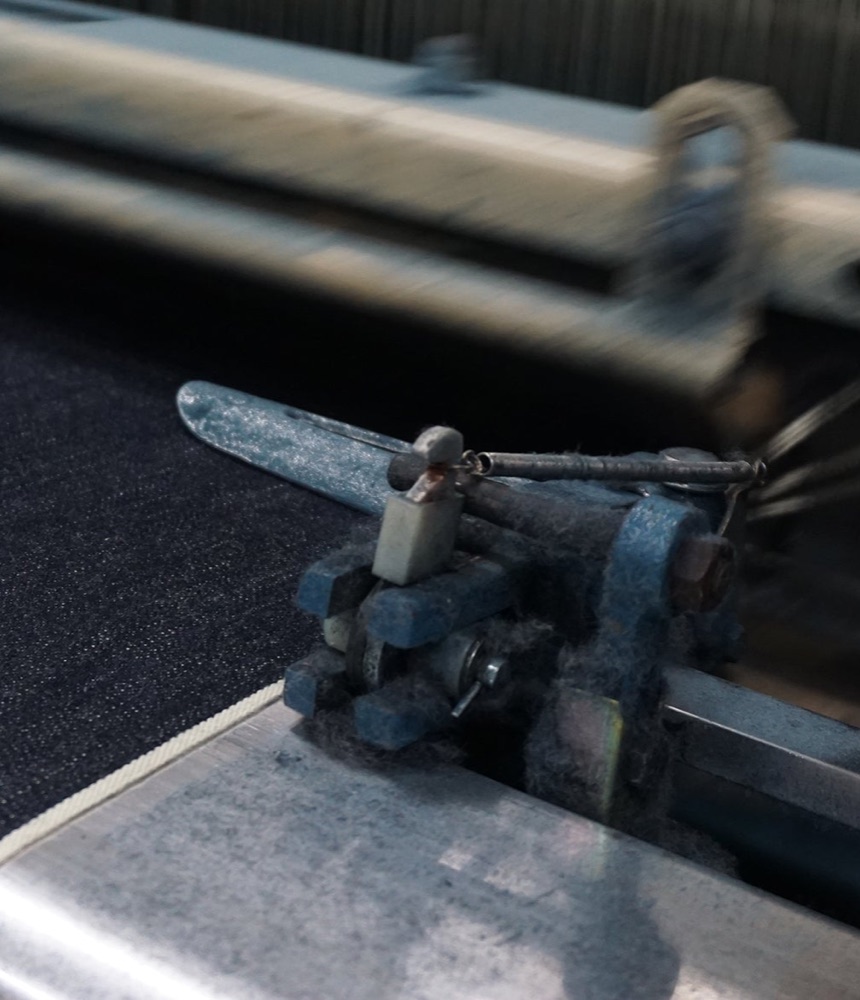
Every Naked & Famous jean except the Made in Japan line is cut, sewn and finished in Canada, in what the company calls its own factories. In a February two thousand twenty-five press release it named them: Montreal and Stornoway, a small town in Quebec’s Eastern Townships. The cloth comes from mills in and around Okayama, woven on vintage shuttle looms. The company visits Japan at least once a season and develops its fabrics with the mills directly, a year and a half to two years before they reach a store, but it does not publish the mills’ names. Most of its cloths do not name the cotton either. The exceptions are the American, Mexican and FoxFibre cottons above.
By a Thread
The hard years for Naked & Famous have mostly been the hard years of the place it works in. Montreal’s garment jobs began falling after the late nineteen eighties, rallied briefly, dropped sharply in two thousand two when quotas on imports from China and other low-wage countries were lifted, and fell again in the recession that the brand was launched into. By two thousand fifteen, Maisonneuve reported, garment manufacturing employed six thousand three hundred five Montrealers, down from nearly twenty-two thousand a decade before. Factories that had stood for decades closed; one menswear plant took more than five hundred jobs with it in two thousand eight. Chabanel is still shrinking, Svarc told McGill News. Sewing at home, he said in another interview, gets harder because there are fewer places left to do it than there were ten years before.
Making the clothes was never easy either. Japanese mills had to be argued into each strange cloth, in person, because Svarc says fabric cannot be developed by email. The heavyweights broke machines in Quebec and needed modified looms in Japan. And a company that sells most of its output abroad, the company says about ninety percent, lives at the mercy of the borders it ships across. When Washington put new tariffs on Canadian goods in two thousand twenty-five, Naked & Famous put a notice at the top of its site telling American customers their orders shipped duties paid, that its Canadian-made jeans, jackets and woven shirts were not subject to the new tariff, and that it would cover the tariff on the few Canadian-made goods that were, such as certain knit T-shirts. That February it issued a release calling itself the only denim brand that cuts, sews and finishes its jeans entirely in Canada. It is not moving. “I love Montreal,” Svarc says. “I’m here to stay.”
“I’m here to stay.”
Weird Guy, Indigo Selvedge
A thirteen-ounce rope-dyed Japanese selvedge in the brand’s classic tapered fit, with a red selvedge line. Plain, dense and slow to fade, it is the honest baseline the whole catalog is built on. Made in Canada.
Weird Guy, Left Hand Twill Selvedge
A thirteen-and-three-quarter-ounce left hand twill that wears softer than right hand twill and fades in vertical streaks. One of the two jeans the brand has sold year-round for more than a decade. Made in Canada.
Super Guy, Elephant 2 Selvedge Reborn
The third release of the twenty-two-ounce cult cloth from the Elephant series, in a slim tapered fit. Rigid for weeks, then high-contrast fades for years. Made in Canada.
Go Further
The Bottom Line
Naked & Famous is the neighbor’s proof. A third-generation Montreal garment family kept cutting and sewing jeans in Quebec while the district around it emptied, and built a following on Japanese cloth, honest prices and no celebrities. It is not an American company, but it sells into America, sews some of its cloth from American cotton, and makes the case every maker in these pages is making: that a jean sewn close to home, without a marketing budget, can still be a good business.