The thing that started Rogue Territory was a question Karl Thoennessen could not stop asking once he saw his first pair of Japanese raw denim. Why was a pair of jeans built like that, and could he build one himself? He had no training and no obvious way in. What he had was the nerve to walk into a Los Angeles denim workshop and ask for an apprenticeship, and enough stubbornness to go from never having touched a sewing machine to filling custom orders within a few weeks. That bench, at the back of a store, is where the whole brand was drafted, one customer’s measurements at a time. More than fifteen years later Rogue Territory is a name spoken with respect in raw-denim circles around the world, and it still does the thing it was founded to do: design and sew its garments in Los Angeles, by hand, under the eye of the same person who started it.
The Apprentice Who Asked
Karl Thoennessen came to denim the way a lot of people did in the early two-thousands, through a single pair of jeans that did not behave like the others. He grew up in New Jersey and got hooked, by his own account, when a friend came back from abroad with a pair of Evisu jeans; from there he fell into the small, obsessive world that had grown up around Japanese cloth and the way it fades to fit the person wearing it. The pull was strong enough to move him across the country. In Los Angeles he found a denim workshop, asked to learn the trade, and apprenticed under Brian Kim, a maker who would later start his own label. Karl had no sewing background at all. “I was expecting to sweep up denim and thread scraps,” he later told Heddels, “but within two weeks I had made my first pair of jeans, soon I was working on custom orders.”
From there he landed the seat that made him. American Rag, the long-running Los Angeles clothing institution, ran a custom service it called the World Denim Bar, and Karl spent roughly two and a half years there building made-to-measure jeans for whoever sat down across from him. It was an apprenticeship of a different kind. Every customer arrived with an opinion, and the steady drip of other people’s requests slowly clarified what he wanted to make himself. “With custom jeans, people kept giving me their design ideas,” he told Heddels, “make that pocket bigger, fell that seam, while I kept thinking up ways I would do it differently.” The why underneath Rogue Territory was never a marketing position. It was a maker’s itch to stop building other people’s jeans and start building his own.
Every product I’ve ever produced, I have tested and worn. That’s the only way for me to really understand.
The Stanton, and a Pocket for a Pencil
In the fall of two thousand nine, Karl stopped making custom jeans and put his own designs on the floor, launching a first small ready-to-wear capsule of a few limited styles inside American Rag. The slim, tapered five-pocket at the center of it became the Stanton, a name that plays on the word standard, and it is still the jean the rest of the line is measured against. What set the early work apart was not novelty for its own sake but function worked out at the bench. The signature detail buyers still point to, a small pen pocket, came straight out of the job: “I was always looking for a pencil when I would draft up patterns,” Karl has said, so he built a place to keep one. It is a tiny thing, and it is the whole philosophy in miniature. Every line on a Rogue Territory garment is supposed to earn its place by doing something.
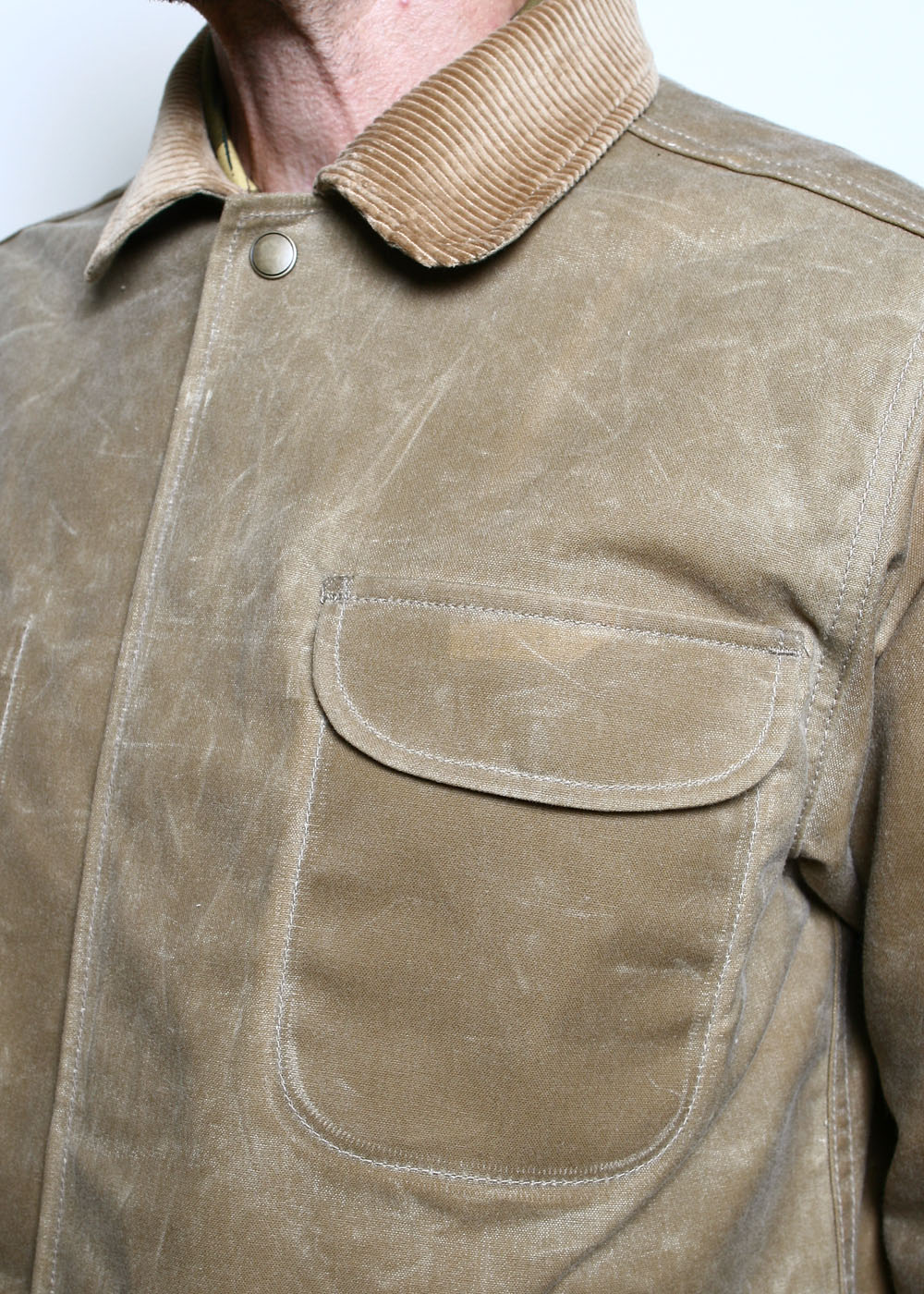
The product that turned a respected denim label into a cult one was not a jean at all. It was the Supply Jacket, a clean chore coat with a corduroy collar and a patch-pocket front that Rogue Territory offers in proprietary Japanese selvedge denim and in heavy American waxed canvas. It became the brand’s calling card, the piece that introduced thousands of people to the name. In two thousand twenty-one it reached a far wider audience still, when Daniel Craig wore the waxed tan version as James Bond in No Time to Die, in the garage scene where Bond uncovers his Aston Martin. It was a striking turn for the franchise to dress its hero in an American workwear jacket rather than European tailoring, and for a small Los Angeles maker it was the kind of exposure money cannot buy. The jacket did what the pen pocket did, at the scale of a whole garment: it took a humble workwear pattern and built it correctly, in good cloth, in Los Angeles, and let the construction make the argument.
From One Bench to a Workshop
Karl left American Rag in two thousand ten and went all in on Rogue Territory as a full-time business by two thousand twelve. The capsule compounded into a complete line. Around the Stanton came other denim fits, and around the Supply Jacket came a deepening catalog of outerwear, shirting, and trousers, anchored by the Officer Trouser, a tapered military-inspired chino that became a staple in its own right. The work moved from the back of a store to the brand’s own design studio, with the cutting and sewing done at a downtown Los Angeles factory Karl works through and watches over. Just as important, the company stopped being a company of one. Karl’s wife, Leslie Yeung, left a corporate marketing job to join full-time in early two thousand thirteen, taking over the wholesale and operational side, and sales tripled that year. Rogue Territory is today owned and operated by the two of them, a husband-and-wife shop that grew up without ever leaving the city it started in.
The growth never came at the cost of the premise. Rogue Territory has stayed deliberately narrow and deep, the kind of brand stocked by the best raw-denim retailers in the country and abroad rather than spread thin across a department store. Its “Keep the Trade Alive” ethos, which celebrates the craftspeople and trades the brand sits among, is of a piece with how it was built: by someone who learned a dying skill from another maker and decided to keep practicing it in public.
The Long Haul
The hard part of the Rogue Territory story is not a single catastrophe. It is the daily arithmetic of being small on purpose. For its first years the brand was effectively one person doing everything, from drafting patterns to sewing to packing orders, and Karl has been clear-eyed about what that costs and why he chose it anyway. “I’m in it for the long haul, building a lifelong connection with my customers,” he said early on. “Selling out your name for a quick buck seems much less attractive when you’re the only member of the company.” The temptation in American apparel almost always runs the other way: grow faster, cut the cloth cheaper, move the sewing somewhere it costs less. Rogue Territory’s whole history is a refusal of that path, made over and over, at the scale of a workshop rather than a factory. The reward for the discipline is a brand that still controls its own making, more than fifteen years in, with the founder still at the center of it.
Made in Los Angeles
Rogue Territory states it plainly on its own pages: its goods are proudly cut and sewn in Los Angeles, California, the city where the brand has been since two thousand eight. That is the confirmed core of the operation, and it is the rarest part. The cutting and sewing, the labor that most American denim brands send abroad, happens here, at a downtown Los Angeles factory the brand designs for and oversees.
The cloth is a different geography, and the brand does not hide it. Rogue Territory’s denim is Japanese selvedge, woven to its specification at heritage mills including Kurabo and Nihon Menpu of Okayama, the same cloth tradition that drew Karl into the trade in the first place. There has been one American exception, and it doubles as an elegy: in two thousand eighteen the brand got hold of a few of the last rolls of Cone Mills White Oak selvedge, the storied Greensboro, North Carolina cloth, and made a small run from it after that mill had closed for good. The Supply Jacket and other pieces also use heavy American waxed canvas, finished with New Jersey Martexin wax, so the picture is mixed in the honest way: Japanese denim, a domestic canvas, and American hands cutting and sewing in Los Angeles. The one thing the brand does not publish is the farm its cotton is grown on, woven into cloth in Japan and not traced back to a field, so we mark the cotton unverified rather than guess.
The Denim Bar Lineage
Rogue Territory does not inherit a hundred-year-old mill or a family name over a factory door. Its heritage is a craft one, and a Los Angeles one. The brand was born inside American Rag’s World Denim Bar, a corner of the city’s clothing culture devoted to the old idea that a pair of jeans could be measured, drafted, and built for a single person. The skill Karl learned there, pattern-making and sewing on industrial machines, is the same skill that emptied out of the American garment trade as production went overseas, and the same skill a small number of Los Angeles makers have spent the last two decades keeping alive. Rogue Territory belongs to that lineage of self-taught and apprentice-taught West Coast denim houses, the ones that decided the work was worth doing at home even when the math said otherwise. It is a young heritage, but a real one, and Rogue Territory is now one of its most established keepers.
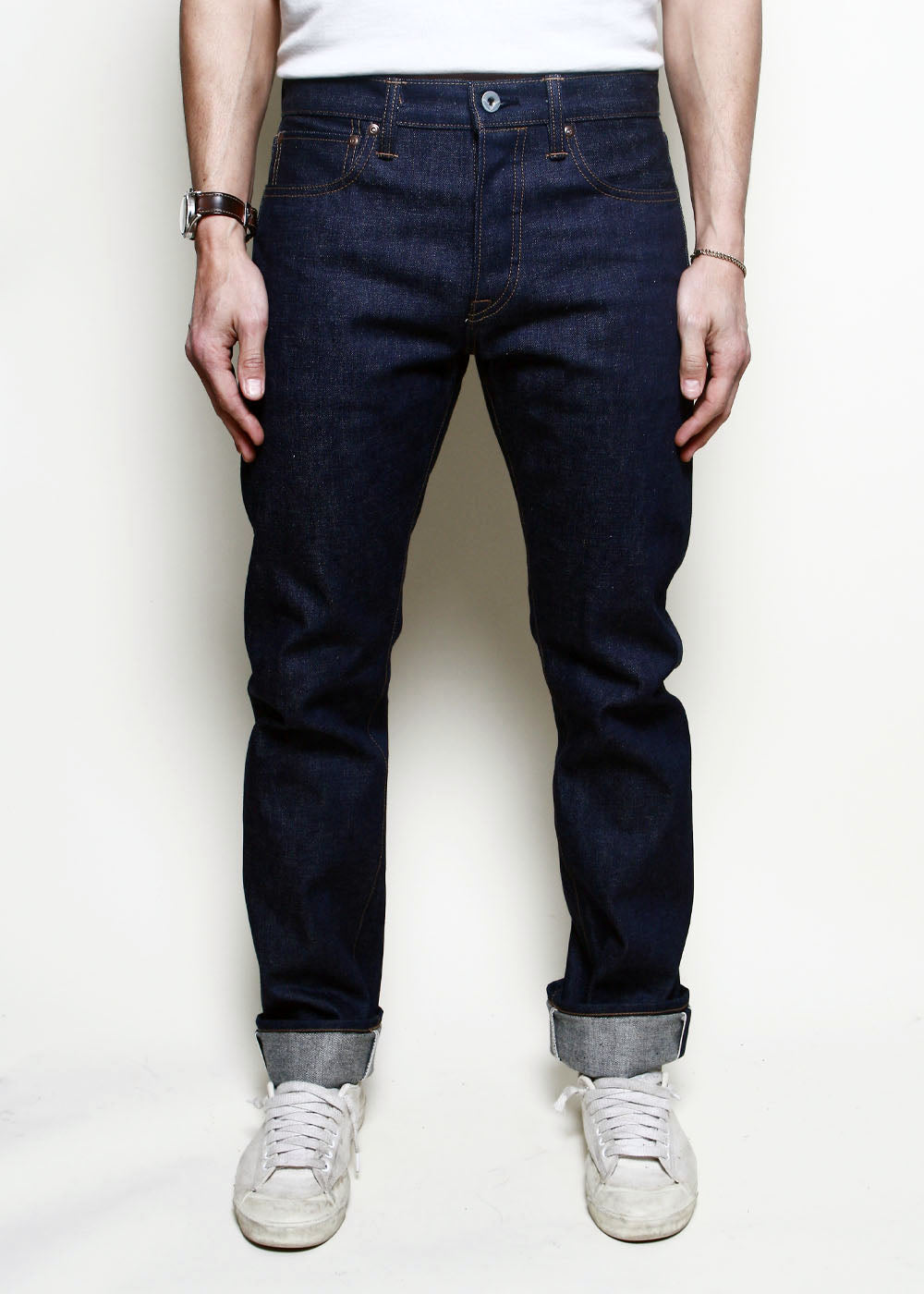
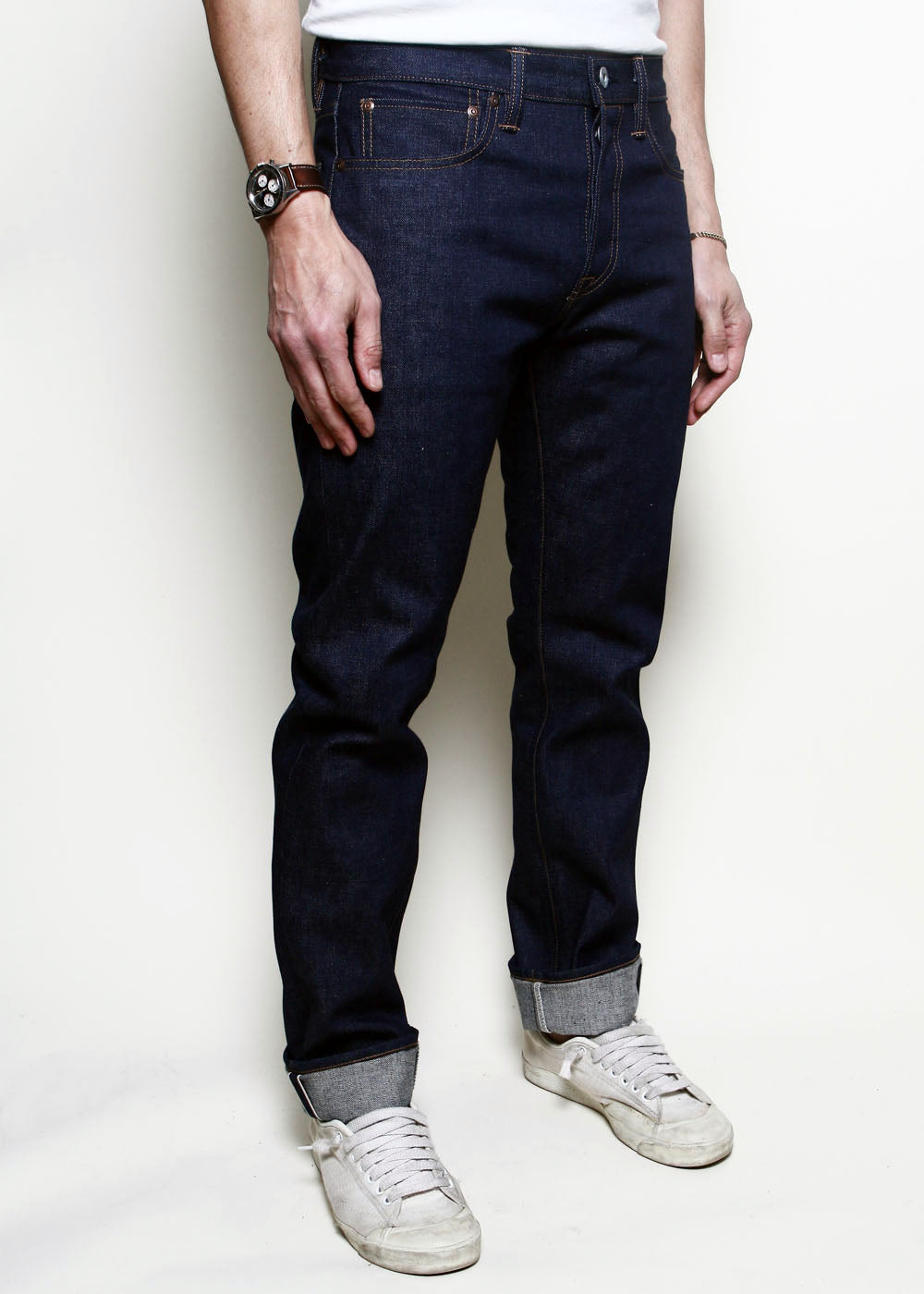
Stanton // 14.5oz Indigo Selvedge
The slim-tapered jean the whole line is built around, in raw fourteen-and-a-half-ounce Japanese selvedge with the brand’s pen pocket and a clean copper-stitched finish. The right first Rogue Territory for anyone who wants a do-everything raw jean to break in themselves. Cut and sewn in Los Angeles.
Supply Jacket
The piece that made the brand’s name: a clean chore coat with a corduroy collar, offered in proprietary Japanese selvedge denim or heavy American waxed canvas. For the buyer who wants the single most Rogue Territory thing in the catalog, a jacket built to age for years.
Officer Trouser
A tapered, military-inspired chino that became a staple alongside the denim, the easy answer for days you do not want to wear jeans. For the buyer building a full Rogue Territory wardrobe, not just a denim collection. Made in Los Angeles.
Go Further
The Bottom Line
Rogue Territory is the proof that the American denim revival did not need an heir to a mill or a war chest. It needed someone willing to learn a hard, fading skill from another maker and keep practicing it at home. Karl Thoennessen taught himself to sew, drafted his brand one custom order at a time at the back of a Los Angeles store, and turned a pen pocket and a chore jacket into one of the most respected denim houses on the West Coast. The cloth is Japanese, openly. The cutting and sewing are Los Angeles, by hand, under the founder’s own roof. For a brand built on a single bench, that is the whole point, and it has never moved.