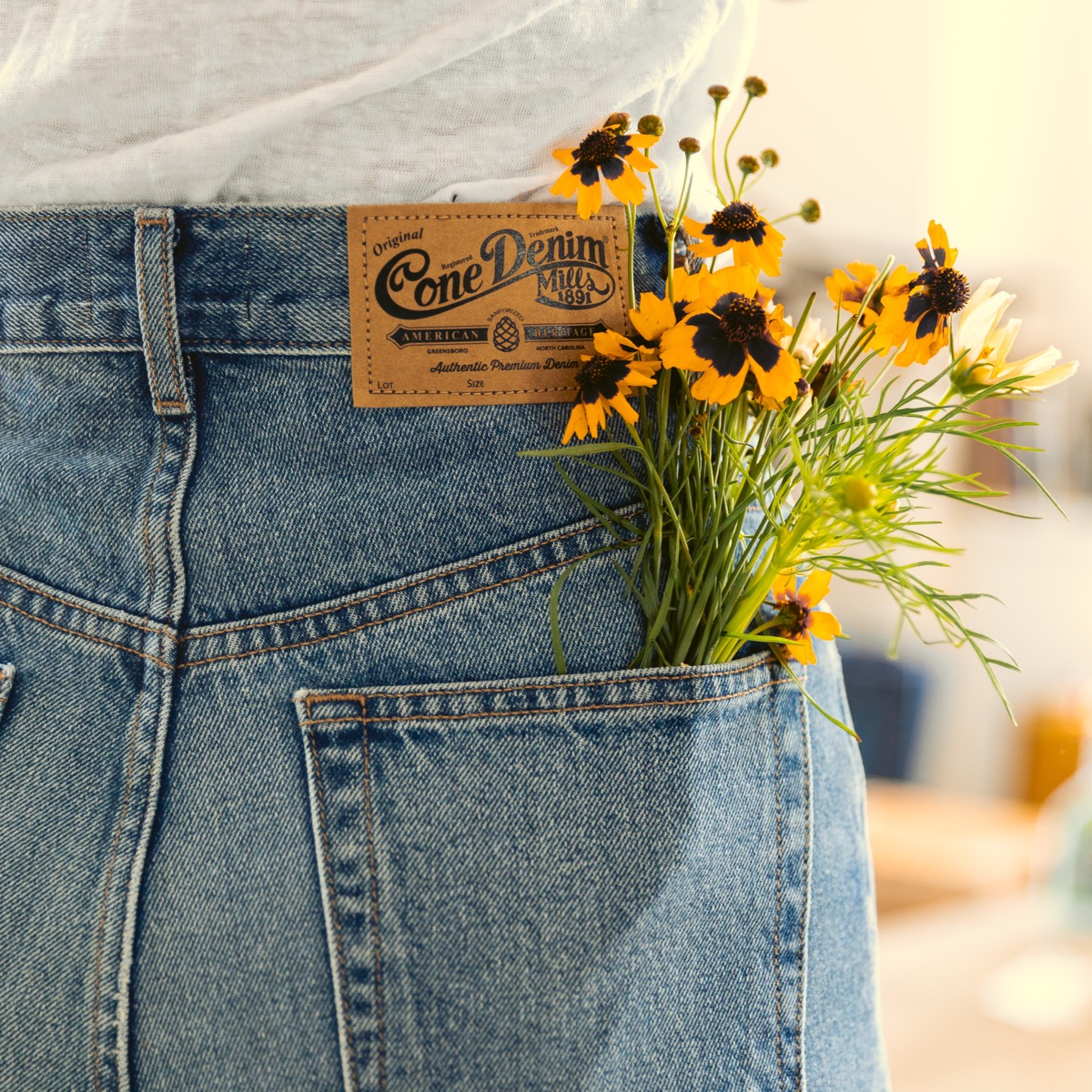
Read enough of these profiles and you start to notice a date. Tellason stockpiled cloth in a Sausalito garage because of it. Raleigh Denim went to Japan because of it. Left Field still has deadstock in the back because of it. Brave Star names a whole line Witness after it. Railcar keeps vintage machines running for what is left of it. The date is the thirty-first of December, two thousand seventeen, and what ended that day was a cotton mill in Greensboro, North Carolina called White Oak. Nearly every American denim brand alive today was either built on its cloth or built in the hole it left. So before another profile leans on that date, the mill itself deserves one.
Two Drummers From Baltimore
Herman Kahn came out of Bavaria in eighteen forty-six, anglicized his name to Cone, and made a living the way a great many immigrants did, walking goods to people who lived too far from a store. He peddled through Virginia and Tennessee, married, and eventually settled his family into a wholesale grocery business in Baltimore. Two of his thirteen children, Moses, born in Jonesboro, Tennessee in eighteen fifty-seven, and Ceasar, born there in eighteen fifty-nine, went into the family firm and onto the road as what the trade then called drummers: traveling salesmen working country stores across the postwar South.
What they saw from those wagons was not groceries. It was mills. The South after Reconstruction was throwing up small cotton factories at a furious rate, and the men running them knew how to spin and weave and almost nothing about selling. Country merchants sometimes paid the Cone brothers in cloth instead of cash, which meant the brothers learned exactly how hard that cloth was to move. In eighteen ninety-one they acted on it, founding the Cone Export and Commission Company in New York to market the output of Southern mills. It worked to a degree that is hard to believe now: by the middle of the decade the Cones were selling for roughly nine out of every ten mill owners in the South. In eighteen ninety-three they moved the main office to Greensboro.
They had convinced an entire region that knowing how to make a thing and knowing how to sell it were two different trades.
Selling other people’s cloth taught them which cloth actually sold. In eighteen ninety-five they stopped brokering and started building. Proximity Cotton Mills, their first, was named for exactly what it was near: North Carolina cotton, the gins, the warehouses, and the North Carolina Railroad. It wove denim from the start. Revolution Mill followed in eighteen ninety-nine, and became the largest flannel mill in the world. Then, between nineteen hundred and two and nineteen hundred and five, they built the one that mattered.
The Largest Denim Mill on Earth
White Oak took its name from a tree, an oak said to be two centuries old standing on the property outside Greensboro. When it opened in nineteen hundred and five it was the largest cotton mill in the South. Within three years it was the largest denim manufacturer in the world, and by nineteen ten the company reckoned it was supplying a third of global demand. At its height the plant ran to one and a half million square feet with something like two thousand five hundred people inside it. Greensboro got a nickname out of it that has outlasted the industry: Jeansboro.

Ten years after White Oak opened, a San Francisco company came calling. In nineteen fifteen Levi Strauss and Company began buying Cone denim, and the arrangement that followed was never written down. It is remembered in both companies as the Golden Handshake: Cone would be the exclusive supplier of the heavy shrink-to-fit XX denim that became the cloth of the five hundred and one, and Levi’s would buy it from nobody else. No contract, no term sheet. It held for something on the order of seventy years.
Around that spine the mill compounded relentlessly. In nineteen twenty-one Cone developed its continuous rope indigo dye range at White Oak and patented the machine, which is the reason indigo denim could be made at industrial scale at all. In nineteen thirty-two it licensed Sanford Cluett’s process and launched Sanforized denim, running to seventy-five million yards a year. Deeptone came in nineteen thirty-six, with the leathery hand and the color that held. In nineteen sixty-two Cone was the first American producer to make and market stretch denim. In nineteen sixty-nine a hurricane flooded the mill and soaked millions of yards of finished cloth, and rather than write it off Cone bleached the damage out and sold the result as Pinto Wash, which the market promptly decided it wanted on purpose. In the mid nineteen seventies Cone was first to put skew into the fabric so the legs would stop twisting. Almost every ordinary thing about a modern pair of jeans was worked out on this floor.
And underneath all of it, until the very end, sat the Draper X3 shuttle looms: slow, narrow, loud machines bolted to turn-of-the-century wooden floors, throwing a wooden shuttle back and forth to produce a self-finished edge. Cone kept them running long past the point of economic sense, buying spares out of junkyards across the South. The bounce of those looms on that wood is the reason White Oak denim came out irregular, slubby, faintly red-cast, and impossible to reproduce on a modern projectile loom. Ken Kunberger, who was running Cone Denim at the end, said seeing them in production was like walking through a museum, and that there was a music to them.
The Company Town
A mill that size needed people, and people needed somewhere to live, so the Cones built that too. At their peak the company’s mill villages covered four hundred and fifty acres and housed roughly two thousand six hundred and seventy-five workers in about fifteen hundred houses, the second largest mill community in North Carolina after Cannon’s Kannapolis. After a strike in nineteen hundred damaged the company’s reputation, the brothers went all in on paternalism: schools, clinics, orchestras, ball teams, Fourth of July picnics, paved streets, running water, garden plots, subsidized food during the First World War. They walked the villages themselves and greeted workers by name. It bought twenty-five years of labor peace.
Then the nineteen twenties went bad and the company answered with the stretch-out, cutting wages and staff at the same time it raised the workload of everyone still there. The goodwill did not survive it. In May of nineteen thirty about a third of the workforce turned out for a United Textile Workers rally; a June rally chartered a local; the company evicted union members from company houses and the drive collapsed under that and the Depression together. Management won and the loyalty never came back. After the Second World War Cone sold the villages off and dropped the welfare programs entirely. It should also be said plainly that through all of this Black workers at Cone were confined to janitorial and yard work until the nineteen sixties.
Neither founder saw most of it. Moses Cone died on the eighth of December, nineteen hundred and eight, at fifty-one, having built a thirty-five-hundred-acre estate near Blowing Rock and leaving a bequest that founded the Moses H. Cone Memorial Hospital in Greensboro, a name still on hospitals across the region. Ceasar died on the first of March, nineteen seventeen. Their sisters Claribel and Etta, living on income from the mills, spent the same decades in Baltimore buying Matisse and Picasso from the artists themselves; the Cone Collection at the Baltimore Museum of Art is one of the great holdings of modern art in America, and it was paid for with denim.
The Long Unwinding
The corporate machinery kept grinding forward for a while. Proximity and Revolution merged into Cone Mills Corporation in nineteen forty-eight, and the company listed on the New York Stock Exchange in nineteen fifty-one. Then the century turned on it. The Environmental Protection Agency sued over pollution at the Proximity mill in nineteen seventy-seven and Cone closed the plant rather than fight, taking six hundred jobs with it. A hostile takeover attempt in nineteen eighty-three was beaten back by a leveraged buyout in which forty-seven executives took the company private, and the debt from it hung on into the nineteen nineties. The Salisbury operation, running since eighteen eighty-eight, closed in nineteen ninety-nine.
The real cause was trade. The North American Free Trade Agreement in nineteen ninety-four and the phase-out of global apparel quotas that followed let American clothing brands move their sewing offshore, and a mill in Greensboro cannot sell cloth to a factory in Asia that buys its cloth next door. Cone filed for Chapter Eleven in two thousand three. Wilbur Ross bought it in two thousand four and folded it into the International Textile Group alongside Burlington, then moved production steadily out of the country. In October of two thousand sixteen the private equity firm Platinum Equity acquired the parent. One year later, on the eighteenth of October, two thousand seventeen, it announced that White Oak would close.
The reason it closed is not the one most people assume. Selvedge was not failing. Selvedge was thriving, and it was also tiny: the shuttle looms took up a corner of a plant the size of a football field and accounted for roughly a tenth of output. What paid the bills was the other ninety percent, ordinary denim sold in volume to mid-tier American labels, and that business had evaporated. The heritage brands buying selvedge, Tellason and Raleigh and Left Field and Rising Sun among them, could not consume what a million-square-foot mill had to consume to stay open.
I was constantly told the mill was operating at full capacity. I’m shocked they didn’t have enough orders to keep it open.
That is Roy Slaper of Roy Denim, one of the makers who lost his cloth. About two hundred people lost their jobs. The plant had run for a hundred and twelve years. Greensboro’s mayor at the time, Nancy Vaughan, said the city was committed to helping the employees and that Cone had long been an important part of its history, which is the thing mayors say when a hundred and twelve years ends.
Two Looms and a Distribution Center
Most of the White Oak complex came down, and Walmart took the bulk of what remained as a distribution center. One of the original Draper looms sits in the lobby of a Greensboro resort. The rest were sold to Vidalia Mills in Louisiana, which wove on them for a few years and then failed, and after a sheriff’s sale and a nervous year in which the American denim trade fully expected them to be bought and shipped overseas, forty-five of them were moved to Trion, Georgia, where Mount Vernon Mills is weaving on them now.
But a small piece of White Oak never left. In two thousand twenty-one a nonprofit called the White Oak Legacy Foundation, started by a handful of laid-off employees with fewer than ten members, restarted two shuttle looms inside the original building. Two, out of the hundreds that once filled it. They brought back Debbie Lindsey, who had woven there for more than thirty years, to run them.
I sit on the couch and cried.
That is what she said about the phone call asking her to come weave again. The foundation’s stated purpose is preservation, education, and operating a small number of shuttle looms to make reproductions of the old selvedge fabrics. It is not a business and does not pretend to be one. It is a hundred and twelve years of knowledge kept alive by the people who happened to still have it, in a corner of a building that is otherwise full of pallets.
Where the Name Is Now
Cone Denim did not die in two thousand seventeen. The company still exists, still uses the eighteen ninety-one mark and the Greensboro address on its patch, and turns a hundred and thirty-five years old this year. It weaves at three mills: Parras, Mexico, running since nineteen ninety-five; Yecapixtla, Mexico, since nineteen ninety-eight; and Jiaxing, China, since two thousand seven, which is where its selvedge is made today. No Cone denim is woven in the United States. The Greensboro office moved in two thousand twenty-three into Revolution Mill, the flannel plant Moses and Ceasar built in eighteen ninety-nine, which is now offices.
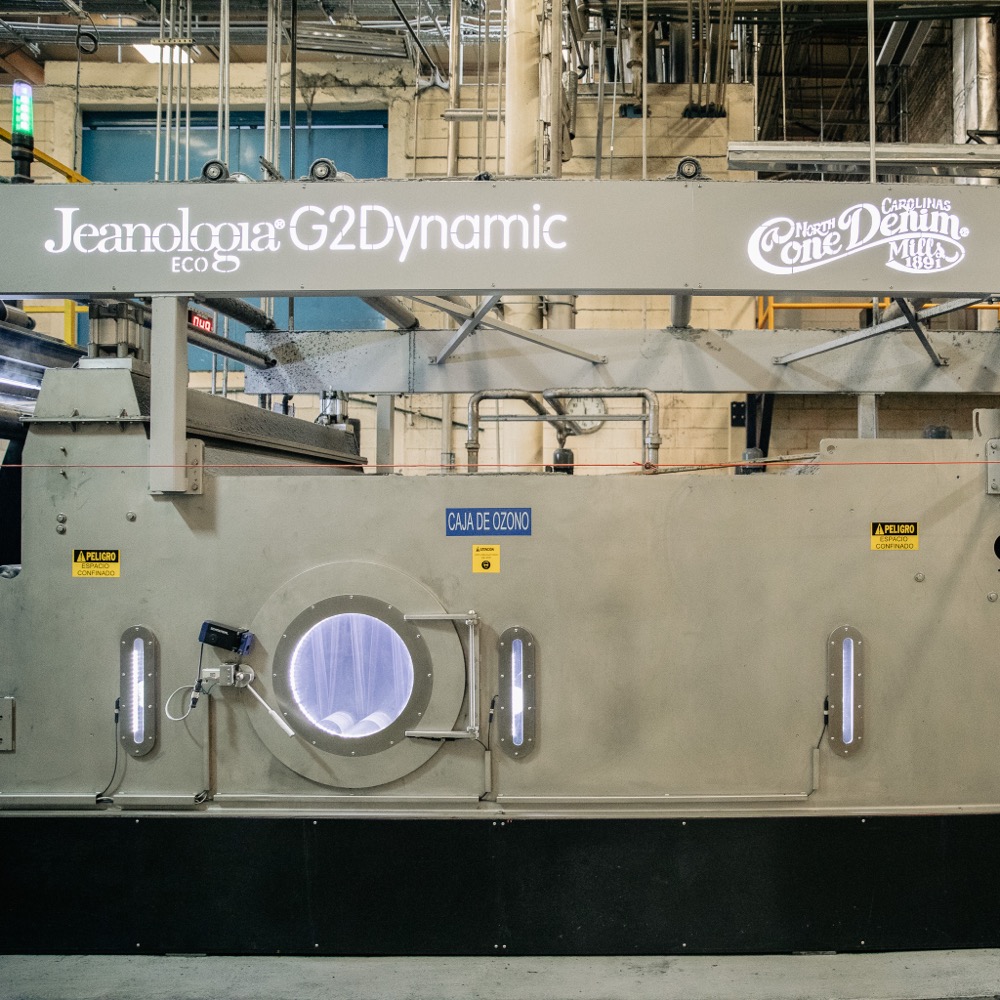
In September of two thousand twenty-five, Artistic Milliners, a denim manufacturer headquartered in Karachi with more than a dozen facilities in Pakistan, agreed to buy a majority stake in Cone Denim from Elevate Textiles. The deal was set to close in the first quarter of two thousand twenty-six. Cone continues as a standalone company under its own name, and gains Artistic Milliners’ garment plant in Parras and its Star Fades International laundry and development center in Los Angeles, which gives the combined business a finishing operation on American soil for the first time in years. Cone’s president, Steve Maggard, singled out that laundry as the exciting part of the deal.
The company that owns the name is now majority owned in Pakistan, weaving in Mexico and China, finishing in Los Angeles, and headquartered in a converted flannel mill in Greensboro. The looms that made it famous are turning in Georgia under a New York cotton firm’s ownership, run by a mill founded in eighteen forty-five. Two of them are still in the original building with a weaver who ran them there for more than thirty years. There is no tidy version of this. What there is, is a lot of people who refused to let the last of it get scrapped.
Brave Star Witness
Thirteen-ounce White Oak deadstock, cut and sewn in downtown Los Angeles. Named Witness because that is what it is. The most affordable way to own real American Cone denim while any is left.
Railcar Black Lot 001
Twelve-ounce deadstock White Oak red line, built to order on hundred-year-old machines in El Monte, California. Four to five weeks. The most careful use anyone is making of the remaining cloth.
Gustin’s Cone Collection
Gustin has run Cone cloth as campaign fabrics for years and still lists a rotating handful. Most are sold out at any given moment, which is the honest state of the supply.
Go Further
The Bottom Line
Cone did not lose to a better mill. It lost to a trade regime that moved the sewing offshore and took the cloth with it. The selvedge everyone loved was a tenth of the business; the nine tenths that paid for it went to Asia, and the tenth could not carry a million square feet alone. That is the arithmetic every maker in this publication is now trying to beat at a smaller scale, and it is why forty-five old looms turning in Georgia matters more than nostalgia.