
In the northwest corner of Georgia, where the Appalachian foothills run down toward Alabama, there is a mill town called Trion, and it exists because of a cotton mill. The mill came first, in 1845, and the town grew up around it. One hundred and eighty years later that mill is still running, under the name Mount Vernon Mills, and it is the largest denim weaver left in the United States. To understand why it matters that the historic White Oak looms are turning again, you first have to understand the company that took them in. Mount Vernon is not a heritage brand reviving a story. It is the story, still operating, one of the last of its kind that never stopped.
A Mill Town Called Trion
Three Chattooga County businessmen, Andrew Allgood, Spencer Marsh, and W.K. Briers, organized the Trion Factory on October 12, 1845, and the first yarn came off the spindles two years later. It was the first cotton mill in northwest Georgia, a modest operation running a few hundred spindles, turning out yarn and the coarse osnaburg sacks local farmers needed to move a wheat crop. During the Civil War it wove rough woolen cloth for Confederate uniforms, and in 1864 Sherman’s army, cutting through Georgia, closed the mill for the duration rather than putting it to the torch, a mercy that local lore has embroidered ever since.
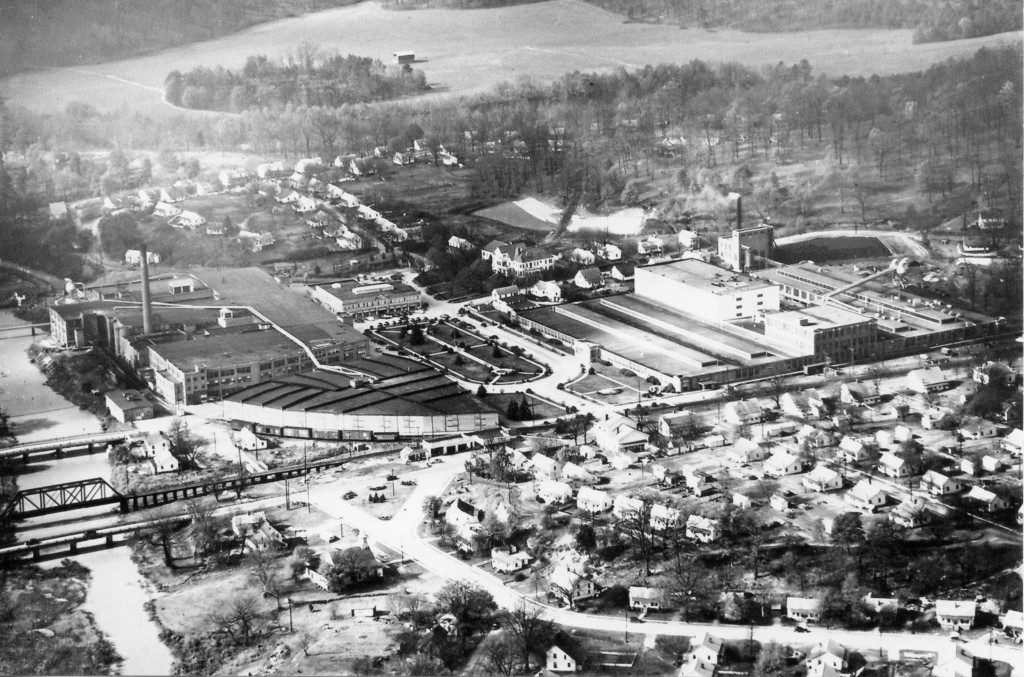
A fire gutted the mill in the 1870s. The owners rebuilt it in brick, and the new mill began doing the thing the company is still known for a century and a half later: it started weaving indigo denim. The identity that defines Mount Vernon today was born, almost literally, out of the ashes of the original.
Three Families, Two Names
For its first hundred and fifty years the mill passed through three families. The Allgoods ran it until 1912, when a New York businessman named Benjamin Riegel bought it and renamed it the Trion Company; the Riegel family held it for the next seventy-five years. In 1987 it passed to the R.B. Pamplin Corporation, the family-owned company out of Portland, Oregon that owns Mount Vernon to this day. The mill has been privately held for its entire existence, and that is part of how it survived. There were no quarterly investors demanding it chase cheap labor offshore.
The name is its own small story, and it does not come from Georgia at all. “Mount Vernon” began with a set of cotton-duck mills in Baltimore that wove heavy canvas sailcloth for clipper ships in the 1840s, later consolidated as Mount Vernon-Woodberry. When the Pamplin corporation brought the two textile lineages together in the 1980s, buying Mount Vernon in 1982 and the Riegel mills in 1985, the Baltimore name went onto the Georgia mill. The company that resulted runs today out of Mauldin, South Carolina.
The Last Big Denim Mill in America
Mount Vernon is not only denim. It is a diversified, vertically integrated textile company, weaving flame-resistant fabrics, pocketing, industrial and apparel cloth, and even producing the sizing chemicals that go into the cloth, across roughly a dozen facilities in the Carolinas, Georgia, and Mississippi, with a workforce in the low thousands. In 2022 it bought a yarn-spinning operation in Rockingham, North Carolina, so it could control the chain from fiber forward. But the heart of the company is still Trion.
The Trion plant runs to more than a million square feet, and the company calls it the biggest denim mill in America. By a 2018 accounting it was consuming around a million kilograms of cotton a week and weaving on the order of two million yards of fabric, and it operates what is widely described as the last indigo rope-dye range left in the country. Its denim sits behind names most Americans own without knowing it: Levi’s, Wrangler, Lee, Carhartt, Dickies, Ariat, American Giant. Both Origin’s jeans and Imogene + Willie’s Cotton Project denim are woven here too.
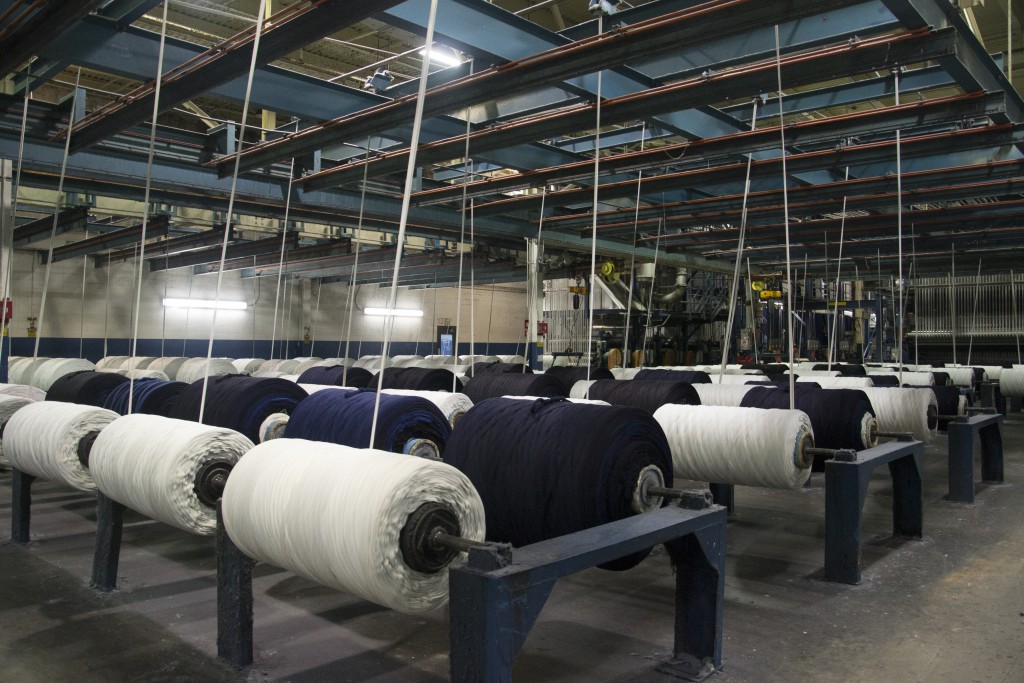
When Cone Mills’ White Oak plant in Greensboro closed at the end of 2017, taking industrial-scale American selvedge with it, Mount Vernon was the big domestic denim weaver still standing. It survived, its merchandising chief said at the time, by holding its costs as low as it could to compete with Mexican mills and by binding itself tightly to vertically integrated customers. Endurance was the whole strategy. Which is what makes the next chapter so unexpected: a company that had spent two decades simply outlasting the collapse decided, in its hundred and eightieth year, to go on offense.
The Looms Came Home
The looms in question are not just any looms. For one hundred and twelve years White Oak wove its cloth on Draper X3 shuttle looms, the slow, narrow machines that give selvedge denim its self-finished edge and built the reputation of American denim. When the plant closed, those looms did not vanish. They passed to Vidalia Mills in Louisiana, which wove on them for a few years before collapsing under more than thirty million dollars of debt. Vidalia’s failure was not only financial. Brands that tried its cloth came away frustrated by the quality and consistency of a young operation still learning looms it had only just acquired, and that loss of credibility was as fatal as the balance sheet. The machines were swept into an April 2025 sheriff’s sale, and because Vidalia did not actually own them, their fate was open. Much of the denim industry feared they would be bought by an overseas firm and leave the country for good, the final indignity of American craft equipment finishing its life abroad.
That did not happen. A New York firm, KaKa Cotton, ended up owning the looms, and in October 2025 Mount Vernon announced a partnership to bring them home: forty-five historic Draper X3 shuttle looms plus forty-five Picanol President looms, moved four hundred and sixty miles from Louisiana to Trion. KaKa owns the machines, Mount Vernon runs them, and the agreement is open-ended, meant to keep them in Trion for good. As of this spring the looms are running again, and the first rolls of American industrial selvedge in years are expected within weeks.
It is our intention for the looms to never leave Trion.
Mount Vernon’s president, Bill Rogers, is careful not to oversell it. One mill restarting ninety looms does not rebuild a national supply chain, and a selvedge line is a specialty operation, not a return to mid-century volumes. The plan starts modest, one shift and around twenty thousand yards a month, against the mill’s existing one hundred and fifty thousand yards of core denim. And Rogers is blunt that owning the machines is not the same as mastering them.
Just because you have the looms doesn’t mean you can make quality selvedge denim. I do want to run a business, not a museum.
That last line is the whole argument of this publication in a sentence. Weaving is the link in the chain that broke most completely in America, and White Oak’s closure was the moment it broke. A pair of the original White Oak looms still run in Greensboro, kept going at boutique scale by the White Oak Legacy Foundation, but industrial weaving is what disappeared, and industrial weaving is what Trion is trying to restart. A one-hundred-and-eighty-year-old company betting real money that domestic selvedge can be a business, and not a heritage exhibit, is the strongest existence proof we have that the broken link can be re-forged. The looms came home. The open question is whether they can pay for themselves.
Origin
The made-in-USA jean at an import price, cut and sewn in North Carolina from denim woven on this floor.
Imogene + Willie
The Cotton Project natural-indigo jean, woven at Mount Vernon as part of a seed-to-garment American chain.
The Selvedge Line
The first American industrial selvedge in years, off the restored White Oak Draper looms in Trion. Watch the brands that pick it up.
Go Further
The Bottom Line
The looms that wove America’s denim went dark, wandered, and nearly left the country. A 180-year-old Georgia mill brought them home and turned them back on. Whether domestic selvedge can be a business and not a museum is the question the whole rebuild turns on, and Trion is where it gets answered.