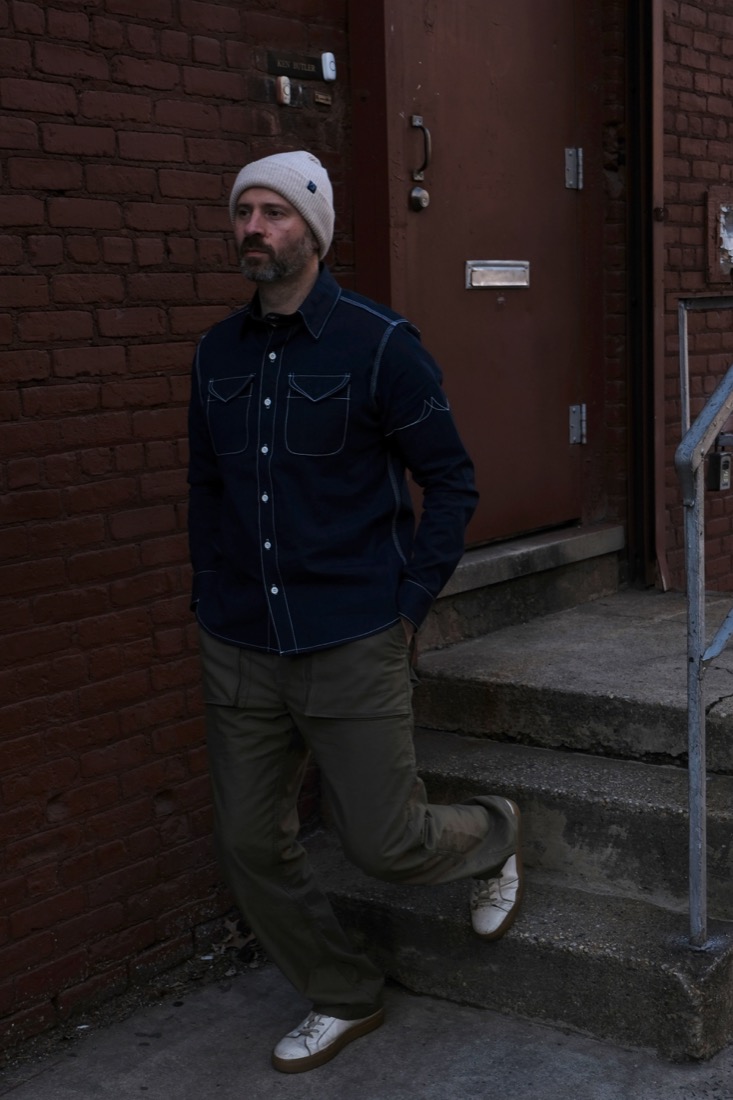
In 2013 Eric Steffen bought a custom suit for his finance job and fell for the way a thing made to your own measurements sits on you. Then he went looking for jeans that fit the same way and could not find them anywhere. So he did the unreasonable thing. He left finance, taught himself to sew and to make patterns from nothing, and built a denim label one pair at a time. He sewed alone for roughly a decade before he hired his first employee. Fitted Underground is what that patience made: bespoke and small-batch jeans cut and sewn to the wearer in a single workshop in Williamsburg, Brooklyn.
From a Trading Desk to a Sewing Table
Steffen had no background in fashion and no idea how to make a garment. He learned the hard way. He earned a patternmaking certification at the Fashion Institute of Technology, bought industrial sewing machines out of a factory that had closed, and practiced on real people, stitching early custom jeans for willing customers at around fifty dollars a pair just to log the repetitions. The first two years, by his own account, were brutal.
“When I quit my job, I had no idea how to do anything with regards to sewing, pattern making or sourcing.”
The product that anchored everything was the bespoke jean. A customer picks the fabric, the fit, the hardware, the stitching, the leather patch, and the jeans are built from the ground up to a set of measurements, taken in the Brooklyn workshop or read off a favorite pair mailed in. It is the oldest idea in tailoring applied to the most democratic garment in the American closet, and it is the thing a domestic maker can do that an overseas factory cannot.
One Pair, Then a Brand
The bespoke jean proved the hand. Everything after it widened the door. In 2018 Steffen added a ready-to-wear line so a newcomer could buy a finished pair off the rack without commissioning one, and from there the catalog grew the slow, organic way he liked: shirts, jackets, work pants, western shirts, each added only when he could make it well. He likes to say it always feels like flying the airplane and building it at the same time.
The turn came from an unexpected place. A short documentary by the filmmakers behind Raw & Refined, built around the irresistible hook of a finance guy who quit to make jeans, found an audience of more than half a million viewers. Steffen has said it told his story better than he could have told it himself, and the attention it brought finally let him step back from the machines and hire help, moving from full-time production into design and the running of the shop. The decade of solitary stitching had a payoff: by the time the world looked, the product was already world-class.
The Loom That Got Away
Steffen wanted to build on American cloth. For a few years he could. The plan ran on Cone Mills selvedge from the storied White Oak plant in Greensboro, North Carolina, the fabric that had clothed Levi’s and Wrangler for generations. When White Oak shut down at the end of 2017, that source vanished overnight, as it did for nearly every American maker, and Steffen turned to the great selvedge mills of Japan and Italy to keep weaving jeans at all.
Then came a second chance. Vidalia Mills opened in a former Fruit of the Loom plant on the Mississippi in Louisiana and acquired the very Draper X3 shuttle looms that had woven White Oak denim, hauling the machines and the men who knew them south to spin American selvedge again. Steffen leaned in. In November 2021 he collaborated with the denim collector Jason Howe on a project called Passing of the Loom: a single pair of jeans split down the middle, one leg woven on the old White Oak Cone fabric and the other on the new Vidalia cloth, worn for a year by one man to document, fade by fade, whether the torch had truly been passed. Every rivet, thread, and patch on it was sourced domestically.
The looms that wove America’s denim got a second life, and then a second death.
Vidalia Mills shut its doors in late 2024 and its assets went to auction the following year, undone by the brutal economics of running vintage machinery and farming sustainable cotton at the same time. American selvedge went dark a second time. One artifact of that whole arc still sits in the Fitted Underground shop: a heavyweight jean called the Greensboro, woven from the very last of the Cone White Oak denim Steffen had left, a bittersweet final run named for the two-hundred-year-old white oak that once stood on the mill grounds.
American Hands, Japanese Cloth
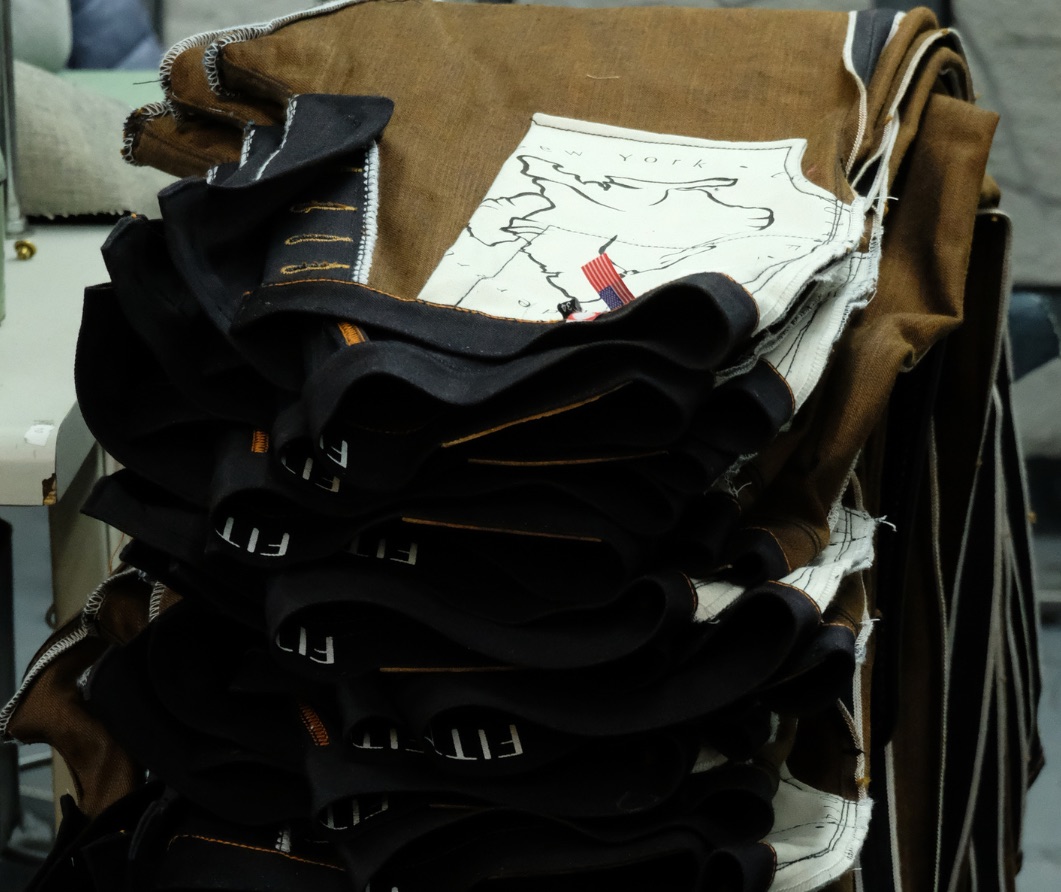
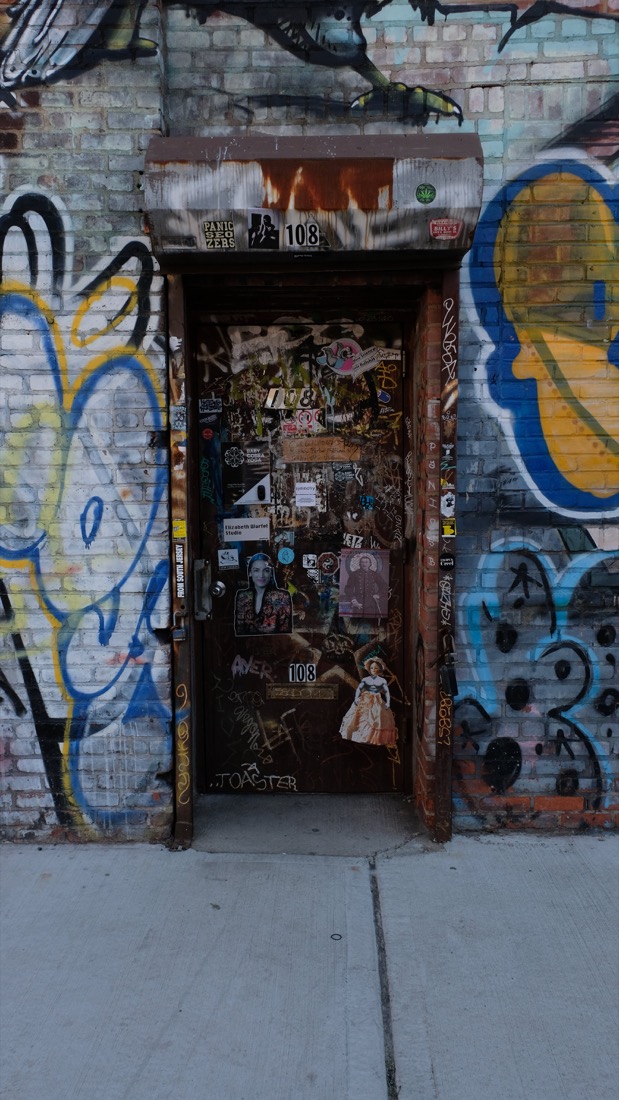
Everything Fitted Underground sells is designed, cut, sewn, and finished in one building at 108 Bayard Street in Williamsburg. Not outsourced, not shipped overseas. Steffen and his small team pattern each order, cut the panels, run them through the industrial machines, and finish the jeans in house, which for a raw-denim maker means the cloth goes out the door honest and unwashed, ready to take the marks of the person who wears it.
The fabric is where the plain truth lives. With American selvedge gone for now, the cloth that matters most to the shop comes from Collect Mills in Kojima, Japan, the town where domestic Japanese denim production began, with other weights drawn from Japanese and Italian mills. So the denim travels before it is cut, and Steffen does not pretend otherwise. What stays in Brooklyn is the making: the pattern, the cut, the sewing, the fit that is the whole point of the place.
D11 Easy Rider
The best-selling fabric, a lighter-weight selvedge with a touch of give. Comfortable from the first wear, the easiest on-ramp to a raw jean built in Brooklyn.
W15 Greensboro
A heavyweight jean cut from the last of the Cone White Oak denim, named for the old oak at the shuttered mill. When it is gone, that cloth is gone.
Bespoke Jeans
Built from the ground up to your measurements, your fabric and hardware, cut and sewn for you in Williamsburg. The whole maker story in one garment.
Go Further
The Bottom Line
Fitted Underground is the bespoke case for domestic denim, argued one stitch at a time. A finance guy who could not find jeans that fit taught himself to make them, and stayed alone at the machines for a decade until they were great. The selvedge is woven in Japan now, but the pattern, the cut, and the fit are pure Brooklyn, and the fit is the whole reason the place exists.