In 2007, in a small apartment in downtown Raleigh, North Carolina, Victor Lytvinenko and Sarah Yarborough set a pair of industrial sewing machines in their living room and started taking jeans apart to see how they were built. Neither had made a garment for a living. What they had was a city in the middle of cotton country, a stubborn idea that a pair of jeans should last and get better with age, and a willingness to learn the trade from the people who still remembered it. Out of that came Raleigh Denim Workshop, and within a year the couple were hand-stitching an order for Barneys New York at a friend’s warehouse on the edge of town.
The Apartment and the Art Show
Yarborough was an undergraduate at North Carolina State University’s College of Design, building a denim collection for the school’s Art2Wear runway show. Lytvinenko, then her boyfriend and now her husband, threw in with her. They were not chasing a brand so much as a single object: the ideal pair of jeans, made well enough to wear for years and handed down rather than thrown away. Both were Raleigh natives, and they wanted to make the thing where they were from, in a state whose mills had clothed the country for a century and had then mostly gone quiet.
They funded the first machines by selling off their own things, and they learned by deconstruction, unpicking pairs they admired to understand every seam, then sewing their own versions one at a time and signing each one. It was less a factory than an atelier, and it was deliberately small.
They were not chasing a brand. They were chasing one perfect pair of jeans.
Sixty Seconds, and a Call from Barneys
The break came the way breaks sometimes do, sideways and on a slow news morning. Yarborough had been making jeans for Lytvinenko to wear around town and for a few friends, and a local morning show caught wind of it and ran a sixty-second segment at six in the morning. A shoemaker in Durham happened to see it, mentioned the couple to a buyer he knew at Barneys New York, and the phone rang. The store ordered one hundred and fourteen pairs.
That was 2008, and it launched the company. Lytvinenko and Yarborough cut and sewed all one hundred and fourteen pairs by hand, with family pitching in, and shipped them. A made-in-a-living-room hobby had become a label carried by one of the most demanding stores in the country.
Learning from the Last Hands
To make jeans the way they wanted to, the couple needed machines that were no longer manufactured and knowledge that was no longer taught. So Lytvinenko drove the struggling textile towns of the Carolinas, finding old equipment in shuttered factories, storage units, and garages, and finding the retired workers who knew how to run and repair it. He learned pattern-making from a former Levi Strauss pattern maker, and he studied the methods of hands who had worked at the last Levi’s factory in the country, in Bakersfield, California.
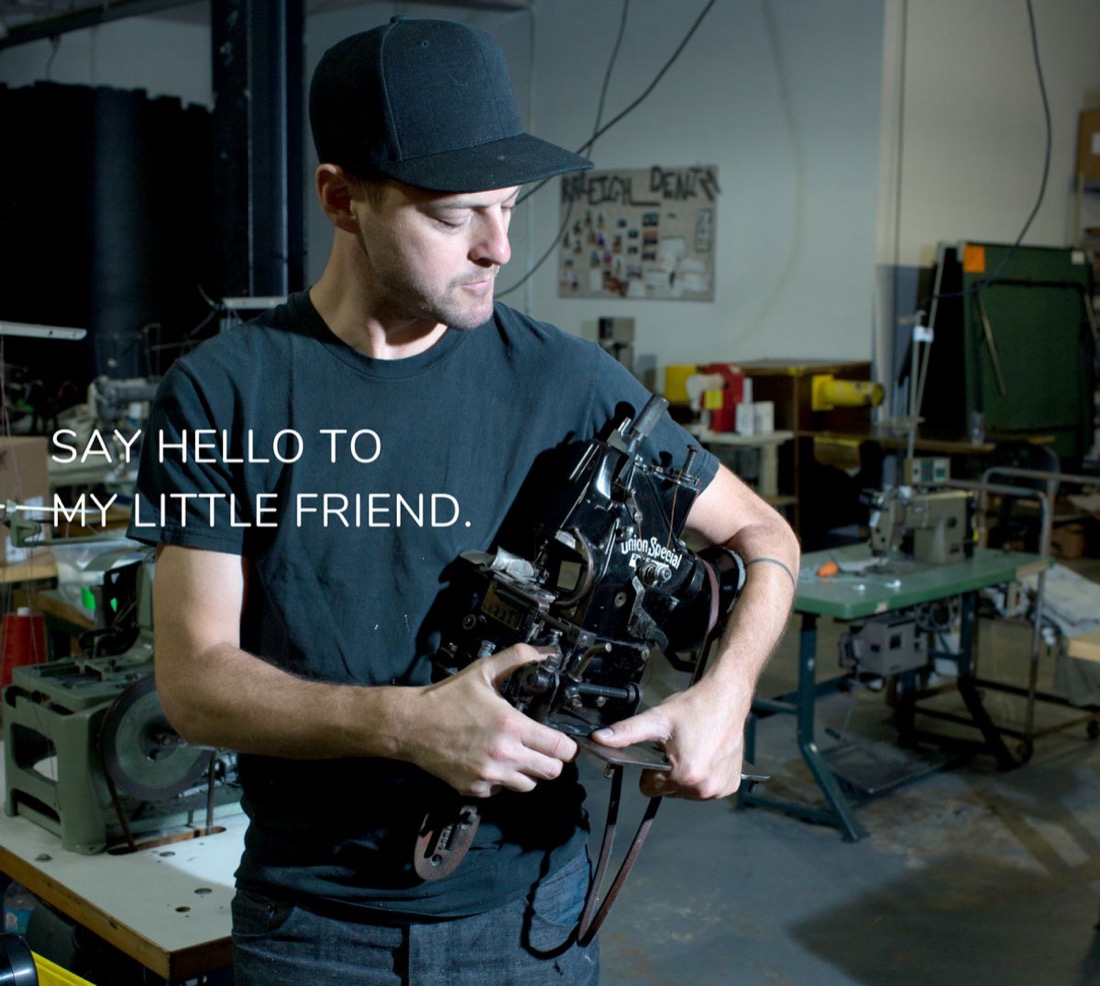
The workshop filled with rescued iron, including four rare Union Special 43200G chain-stitch machines from the 1930s, the tool that puts the roping fade into a properly hemmed jean. The point was never nostalgia for its own sake. It was that the good way to build a pair of jeans had been abandoned, and the only place left to find it was in the memory of the people who had done it before the work went overseas.
“I feel like there was this golden era of manufacturing in America, like right around and after World War Two.”
Built on White Oak
From the start, Raleigh built its jeans on Cone Mills’ White Oak selvedge, woven in Greensboro, North Carolina, an hour and a half up the road. White Oak was the cathedral of American denim: the plant opened in 1905, was the largest denim mill in the world by 1910, and wove its prized selvedge on antique shuttle looms tended by weavers who had spent their lives at them. Designing exclusively on that cloth tied Raleigh’s jeans to the most storied fabric the country ever made.
Then it ended. At the close of 2017, Cone shut White Oak, and Raleigh, like nearly every American maker, lost its domestic selvedge source overnight. The brand went looking for cloth as close to White Oak as it could find, in the great mills of Japan and at home. The home part is the full circle: when White Oak closed, a set of its Draper X3 shuttle looms were taken in by Vidalia Mills in Louisiana, and Raleigh now offers a jean woven on those very looms, the same machines its first jeans were made on, running again under a new roof.
Cut and Sewn in Raleigh
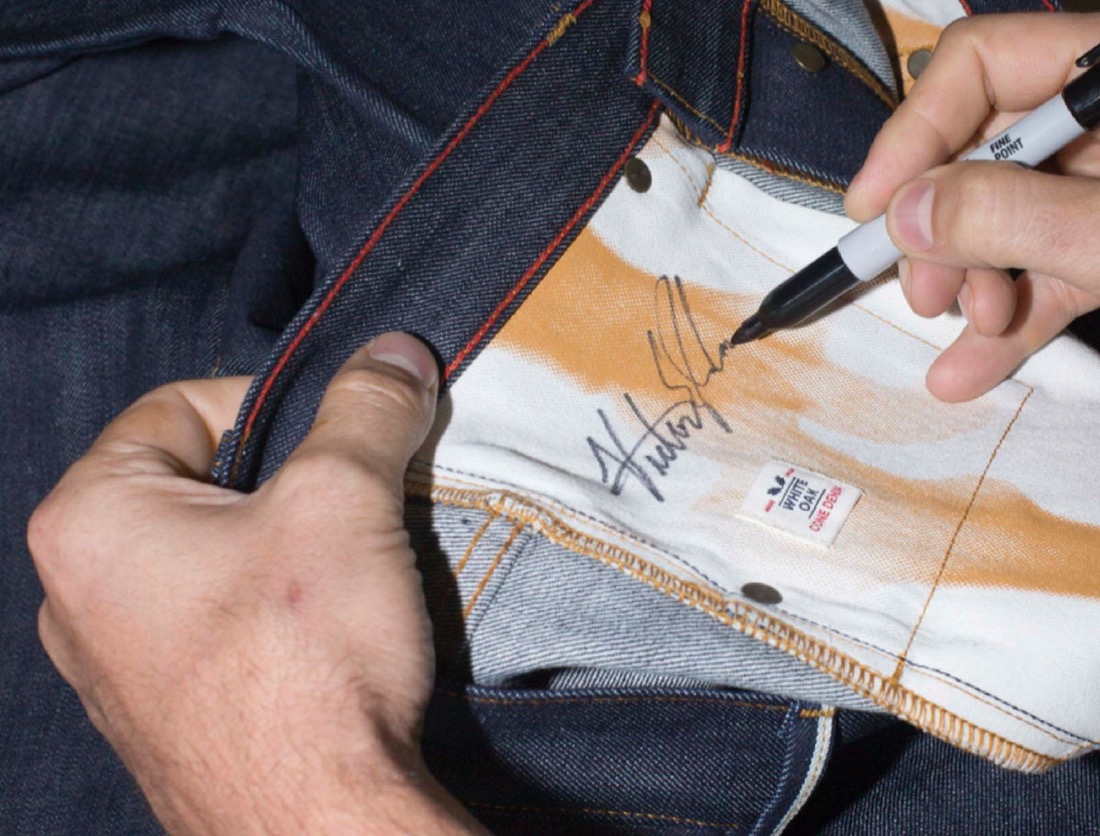
Today Raleigh Denim Workshop runs out of a building in the Warehouse District of downtown Raleigh, where a team of jeansmiths cut and sew the raw selvedge jeans by hand and sign their work inside the front pocket. A pair takes far longer to build than a mass-produced one, passing through many pairs of hands, and the red chain-stitched hem is sewn on one of those 1930s Union Special machines.
Here is the honest map. The artisanal raw selvedge jeans, the heart of the brand and the reason to know it, are cut and sewn in Raleigh. The fabric is mostly Japanese selvedge now, with a domestic option woven at Vidalia Mills in Louisiana. The brand’s lower-priced washed and stretch jeans, by contrast, are sewn in Mexico. The maker story lives in the raw selvedge line made at home.
One Hit, Then a Business
The Barneys order was the spark; the years after were the work of turning it into a company without losing the thing that made it worth doing. The couple built the workshop into a destination, with a retail shop called The Curatory at the front of the building, stocking the full Raleigh collection alongside goods chosen for the same care. They widened the line from a few selvedge fits into washes, stretch jeans, shirts, jackets, and accessories, and they ran ambitious side projects, including a jean made entirely within North Carolina from the first certified organic cotton grown in the state, a small run they described as the lowest-carbon jean they knew how to make.
Recognition followed the work. Lytvinenko and Yarborough became members of the Council of Fashion Designers of America, the trade body of American fashion, and their jeans have been worn by the kind of people who can buy anything, from Brad Pitt to a roster of musicians and actors. None of it pulled the making out of Raleigh.
Alexander, Vidalia 14oz
Selvedge woven at Vidalia Mills in Louisiana on the salvaged White Oak looms, then cut and sewn in Raleigh. Every step on American soil, in a relaxed straight fit.
Jones, Original Raw Selvage
The most popular fit, a thin straight leg in thirteen-ounce Japanese selvedge, handmade in Raleigh and signed inside the pocket. The natural place to begin.
Jones, Original White Oak Selvage
A numbered final run made from the last of the Cone White Oak denim. When it is gone it is gone, which is the whole point. For the buyer who wants the heritage in hand.
Go Further
The Bottom Line
Raleigh Denim Workshop is what happens when two people decide the right way to make something is worth relearning from scratch. They salvaged the machines, found the last hands that knew the work, and built a denim house in the middle of cotton country. The cloth travels more than it once did, but the craft never left Raleigh, and the looms their first jeans were woven on are turning again.