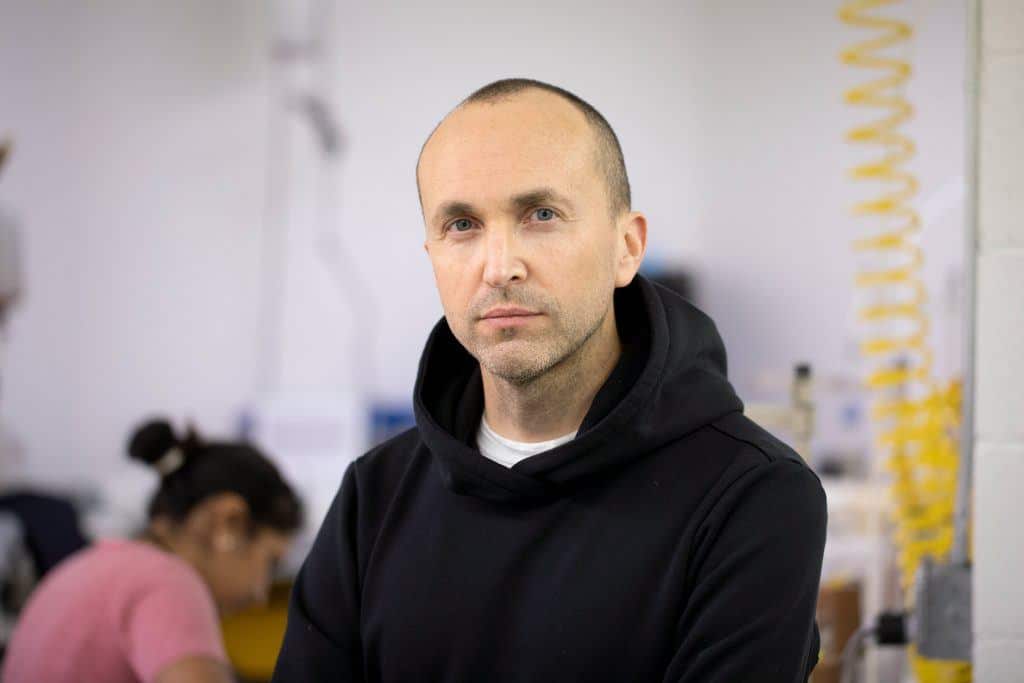
Most clothing companies are marketing companies that happen to sell clothes. They design a garment, send the file to a factory they will never visit, and put their energy into the photograph and the launch. Todd Shelton spent the first decade of his business that way too, and then he did something that looked, from the outside, like a man walking away from his own momentum. He stopped chasing growth, bought sewing machines, and learned to make the clothes himself. The brand that came out the other side is one of the few in America where the person whose name is on the label can walk twenty feet and watch his jeans being cut.
The Kid With the Catalog
Todd Shelton grew up in Tennessee studying the J.Crew catalog the way other kids studied baseball cards, and he decided early that he wanted a clothing company of his own. He went to the University of Tennessee for retail and consumer sciences, then moved to New York in the year two thousand to learn the business from the inside. For three years he worked a fashion day job by daylight and went to design school at night, teaching himself how a garment is actually built, not just drawn.
A Long-Sleeve Shirt, Sold on the Street
In two thousand three he made his first product, a long-sleeve t-shirt, and the detail that would define everything came built into it: he offered it in the standard sizes and in the in-between sizes most brands skip. The fit obsession was there from the first piece. He sold those shirts himself, on weekends, at the street markets in SoHo, from two thousand three until two thousand seven. There was no store and no wholesale account. There was a folding table and the maker standing behind it.
By two thousand five he had built a website, and online orders began to do what the folding table could not. The catalog grew to jeans, shirts, and khakis, and by two thousand nine the business was finally big enough that he could leave the day job and give it everything. He had a brand. What he did not have was control over how it was made.
The Sentence That Built a Factory
Like nearly every small American label, Shelton was at the mercy of factories he did not own. He had moved production back to the United States in two thousand six, stitching together orders across small shops in California, Virginia, New York, and New Jersey, and the problems were always the same: long lead times and quality he could not guarantee. The breaking point came from a pant factory in Brooklyn that kept blowing through a six-week deadline. When he pushed, the owner told him plainly: we will get to your order when we get to it, and if that is not good enough, you need to make a decision.
He made one. A Texas saddle maker he respected had given him the same advice from the other direction: stop outsourcing, buy the machinery, learn to make the clothing in-house, and run lean, with no inventory sitting in a warehouse. At the end of two thousand eleven, with sales up and momentum on his side, Shelton hit the brakes. He spent the next three years and a great deal of his own money building a factory instead of selling clothes. Growth slowed. Customers wrote in asking what, exactly, the company was doing. He kept going anyway, because he had decided that the long-term business depended on owning the thing everyone else rented.
Design without manufacturing is simply marketing.
In February of two thousand twelve he moved into a back corner of an industrial building in East Rutherford, New Jersey, bought his first machine, and hired his first full-time seamstress. The knowledge came from people who had it. Gabriel, who had just arrived from the Dominican Republic, where he had worked in a jean factory, answered a Craigslist ad, taught the shop how to make a pair of jeans, and stayed six months. Mr. Chin, who had once owned a shirt factory in India, came for three. Piece by piece, a corner of a warehouse became a working garment factory.
How It Is Made
What that factory enabled is a model almost no clothing brand attempts. Nothing Todd Shelton sells exists until you order it. Every jean, every shirt, every tee is made to order, cut and sewn after the sale, which means there is no stockroom full of last season’s mistakes and very little waste. Inside the factory the work is organized against the grain of the whole industry: instead of an assembly line where one person sews only pockets all day, a single sewer takes a garment from cutting through pressing, start to finish. One seamstress can cut, sew, and press about three and a half pairs of jeans in an eight-hour shift. It is slow on purpose.
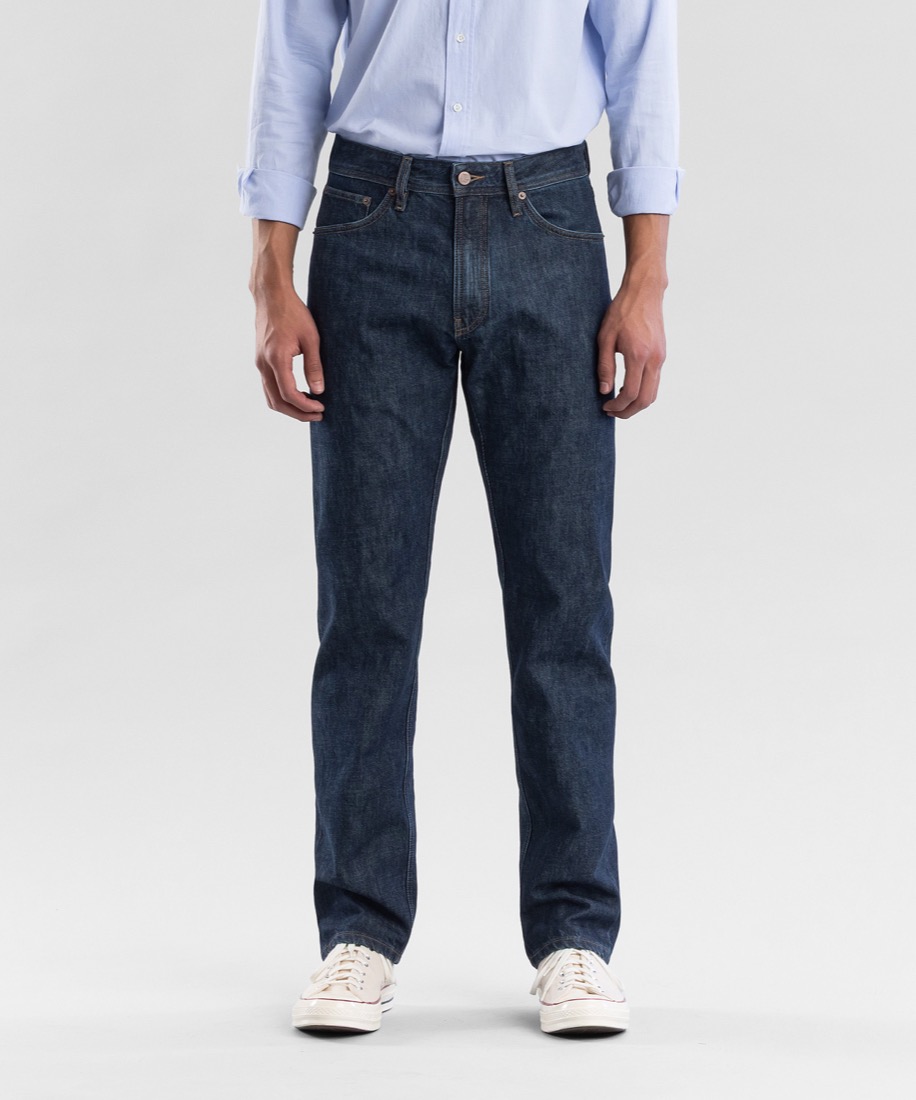
The denim is the one piece that does not come from New Jersey, and the brand is plain about it. The cloth for the flagship jeans is selvedge woven in Okayama, Japan, the country’s premier denim region, because the American industrial selvedge that mills like Mount Vernon are only now trying to revive was not there to buy. Everything after the cloth happens in East Rutherford: the pattern, the cutting, the sewing, the washing, the fitting. The jeans are finished and shipped from the same floor where the founder stands.
Cutting the Catalog to Three
The factory gave Shelton the freedom to solve fit problems one customer at a time, and for years he did, piling on fit options and customizations until the choices became their own kind of burden. So he did the second hard, counterintuitive thing of his career. Beginning in late two thousand twenty-three he started cutting the fit options back, and in early two thousand twenty-five he discontinued nearly everything, leaving three things standing: a cotton jean, a solid button-up shirt, and a crewneck t-shirt. Two decades of catalog, reduced to three essentials he was certain he could make better than anyone else. For a man who had built the whole business on giving customers more ways to get the fit right, choosing to offer less was its own kind of confidence.
In between came the test that closed factories all over the country. When the pandemic hit in twenty twenty, a made-to-order business with payroll and a lease and no wholesale orders to lean on was exactly the kind that did not survive. This one did, and Shelton came out of it arguing that the moment was the start of a menswear renaissance, that people who had spent a year in sweatpants would come back wanting fewer, better, longer-lasting clothes. He had spent a decade building a company for precisely that customer.
Original 13 Selvedge
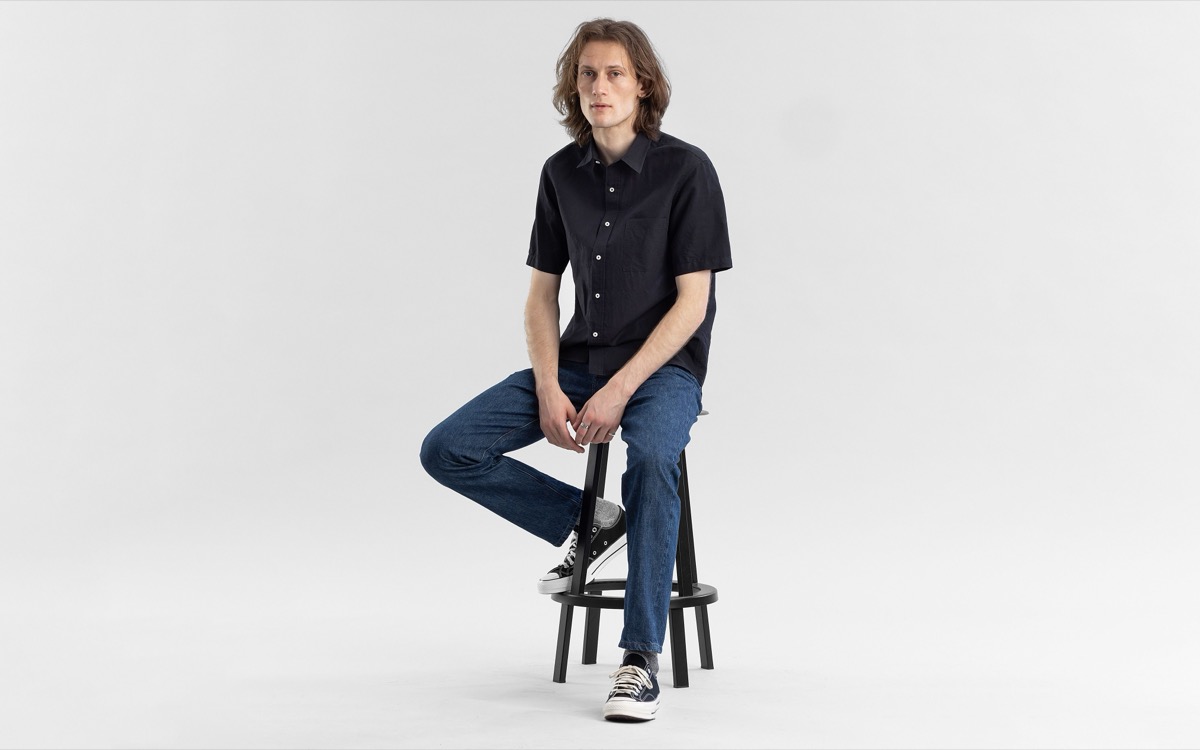
A thirteen-ounce Japanese selvedge jean, cut and sewn and washed in New Jersey. Order it raw to fade it yourself, or pick a wash. The whole maker story in one garment.
Lightweight 11
An eleven-ounce version of the same jean for the buyer who wants selvedge without the stiff, weeks-long break-in. Same fits, same factory.
A Factory Visit
Book an appointment ten miles from Manhattan: tour the factory, try the fits in person, and meet the people who sew the clothes. Free.
Go Further
The Bottom Line
Twice, Todd Shelton walked away from easy growth: once to build a factory when selling was working, once to gut his own catalog down to three things. The result is a brand where the founder owns the machines and the maker can watch the jeans being made. The denim still crosses an ocean, but the making does not leave the room.