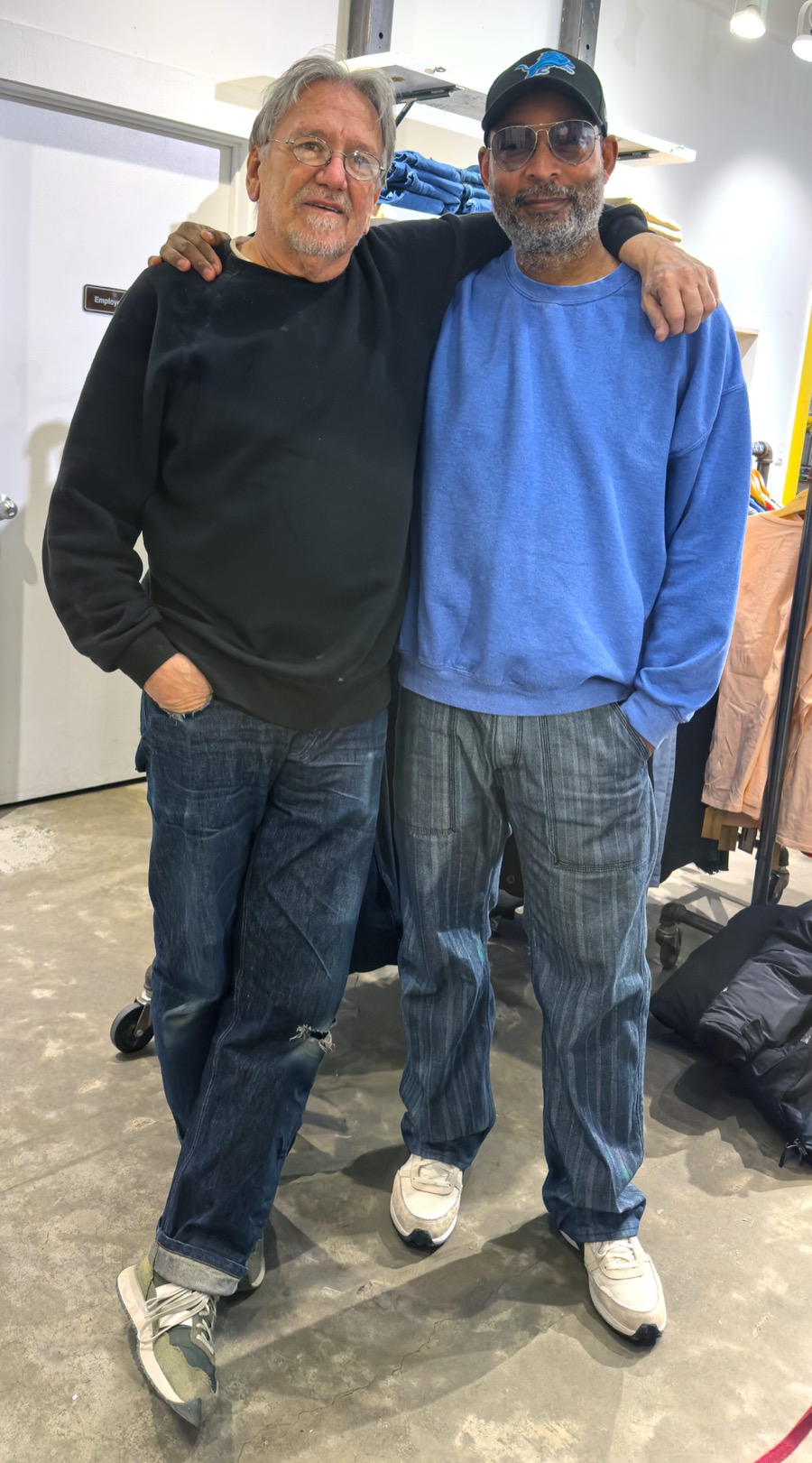
Maurice Malone has been making clothes since 1984, when he was nineteen years old and sewing in his mother’s basement in Detroit. In the four decades since, he has been a hip-hop fashion pioneer, a runway designer nominated for the industry’s highest award, a casualty of the retail collapse that followed September 11, and now a one-man-turned-small-batch denim maker in Brooklyn. Williamsburg Garment Company is the latest chapter, and in some ways the truest: a label built on jeans cut and sewn by hand a short walk from where he first made his name.
From Detroit to the Runway
Malone started his first label, Hardwear, in 1984, selling to Detroit boutiques and the local department store. He was self-taught, and he funded those early jeans the only way he could, by throwing the rap parties and concerts that were turning Detroit into a hip-hop city. In 1993 he opened the Hip Hop Shop, a clothing store on West Seven Mile that doubled as an open-mic venue, and it became a proving ground for a generation. Eminem, J Dilla, Proof, and Slum Village all came through its doors, and the scene it captured would later turn up on screen in 8 Mile.
By the middle of the decade Malone had moved to New York and pivoted from streetwear to tailored menswear. In 1997 he was nominated for the CFDA’s Perry Ellis Award for new menswear talent, and he is widely described as the first designer to cross from hip-hop culture into the high-end designer world. For a kid from Detroit who taught himself to sew, the runway was the summit.
He had reached the top of the industry. Then it came apart.
The Fall, and the Long Way Back
After the attacks of September 11, 2001, retailers cancelled their orders, and Malone, who had already paid to produce a full season, watched the business collapse. It is the kind of blow that ends most careers. He did not quit. In 2002 he helped develop an aged-denim wash process that is now used in factories around the world, and he kept his hand in the trade.
In late 2011 he relaunched, alone and on a shoestring, under a new name tied to the Brooklyn neighborhood that had become his base: Williamsburg Garment Company. He started it, by his own account, as a one-person operation for less than two thousand dollars, and he rebuilt it the hard way, on small batches, made-to-order jeans, and a denim-alterations business that became one of the most respected in the city.
Cut and Sewn in Greenpoint
Today Williamsburg Garment Company runs out of a workshop in Greenpoint, Brooklyn, where Malone and master tailor Frank Pizzurro cut and sew the house and custom jeans by hand. The made-to-order program is the heart of it: you choose the fabric and the fit, the jeans are built for you, and they go to a wash house in California for finishing.
The fabric is where the honest story lives. For years Williamsburg built its jeans on Cone Mills’ White Oak selvedge, the celebrated American denim woven in Greensboro, North Carolina. When White Oak closed at the end of 2017, Malone lost his domestic selvedge source, as nearly every American maker did, and turned to the great mills of Japan and Italy for much of his cloth. So the denim now often comes from abroad, but the cutting, the sewing, and the making stay in Brooklyn.
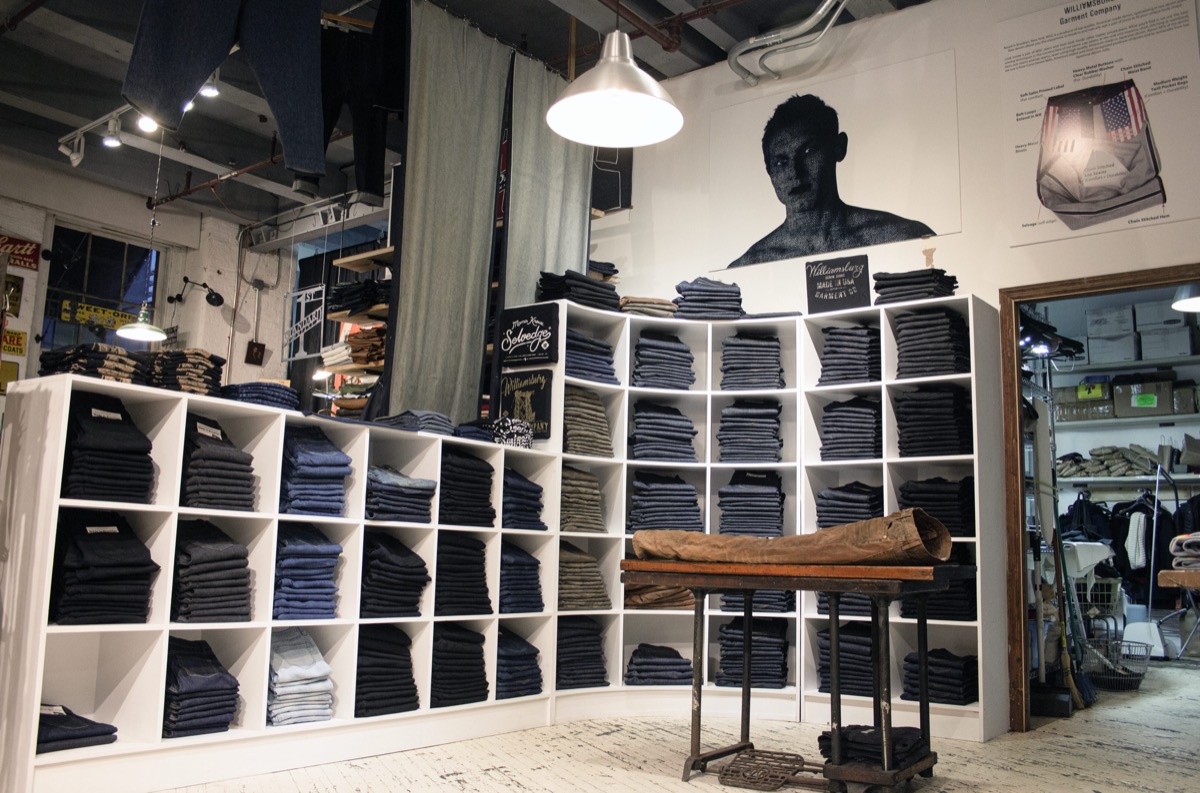
Custom Made-to-Order Jeans
Cut and sewn for you in Greenpoint, your fit and your fabric, finished in the USA. The whole maker story, in one garment.
Lee Ave Canvas Work Pant
A made-in-USA house piece in cotton canvas, for the buyer who wants something domestic and hard-wearing beyond raw denim.
Benzak 14oz Selvedge
An accessible raw-selvedge jean the shop curates. The cloth is Italian Candiani and the make is overseas, an honest entry point into raw denim.
Go Further
The Bottom Line
Williamsburg Garment Company is what survival looks like when a maker refuses to stop making. A Detroit kid built an empire, lost it, and came back to a sewing table in Brooklyn. The fabric may travel now, but the hands are local, and the story is as American as denim gets.